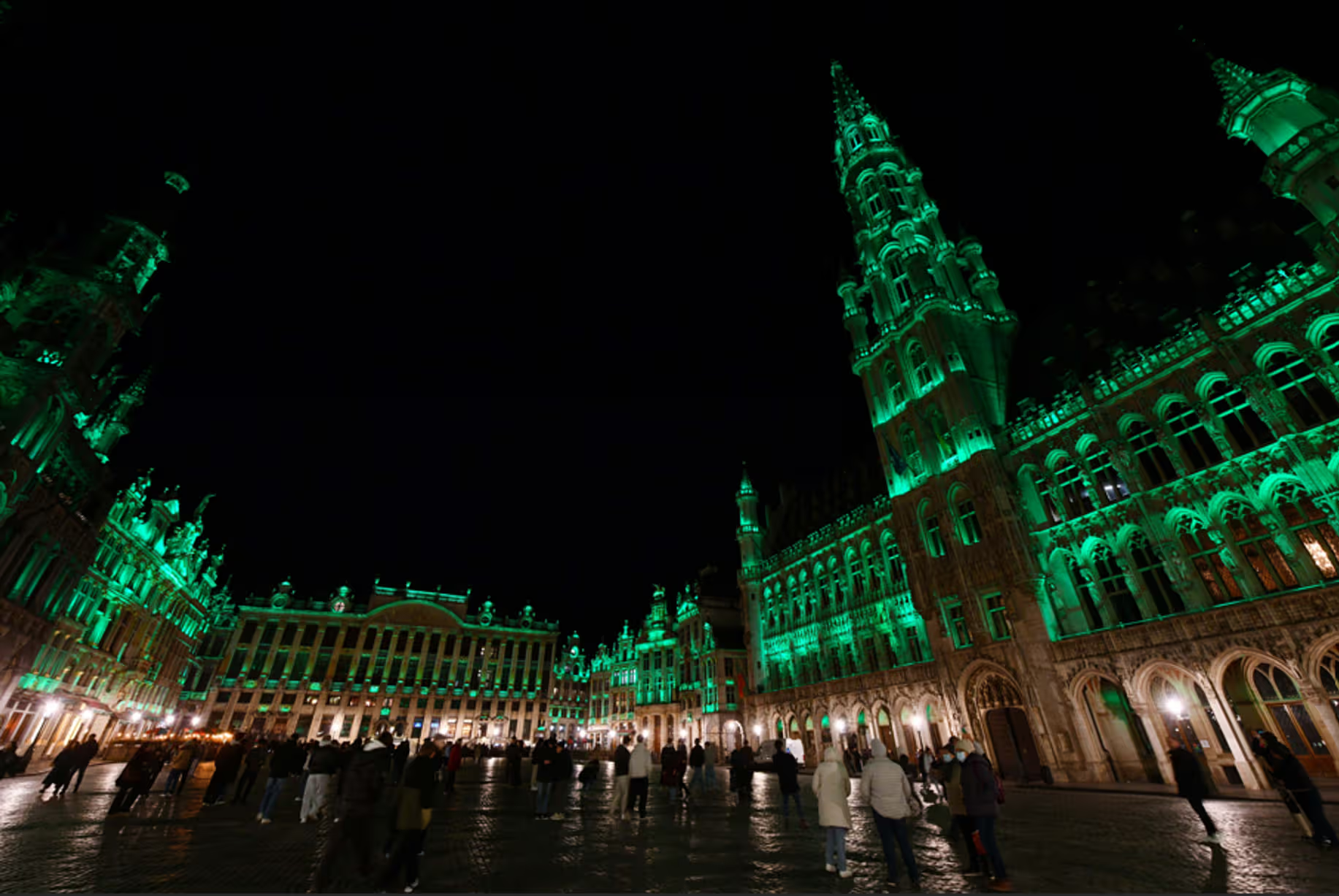

I woke up in Brussels at an hour that felt like a personal attack. The city was still half‑asleep, the sky undecided, and even my coffee looked like it wished it were still in bed. But Hamburg was waiting, and with six hours of road ahead of me, I figured it was best to start before my brain had time to protest.
I packed the car with the weary efficiency of someone who has been living out of a suitcase long enough to question all their life choices, took one last look at Brussels, and rolled out onto the road.
Belgium’s Early‑Morning Goodbye
Belgium in the early morning is surprisingly gentle. Quiet roads, soft light, and a sense of calm that made me think, This is going to be a peaceful drive.
That optimism lasted until the border.
🇧🇪 → 🇩🇪 The Border Crossing That Barely Exists
If you’ve ever crossed from Scotland into England, you know the drill: a sign, maybe a flag, perhaps a sheep giving you a judgmental look.
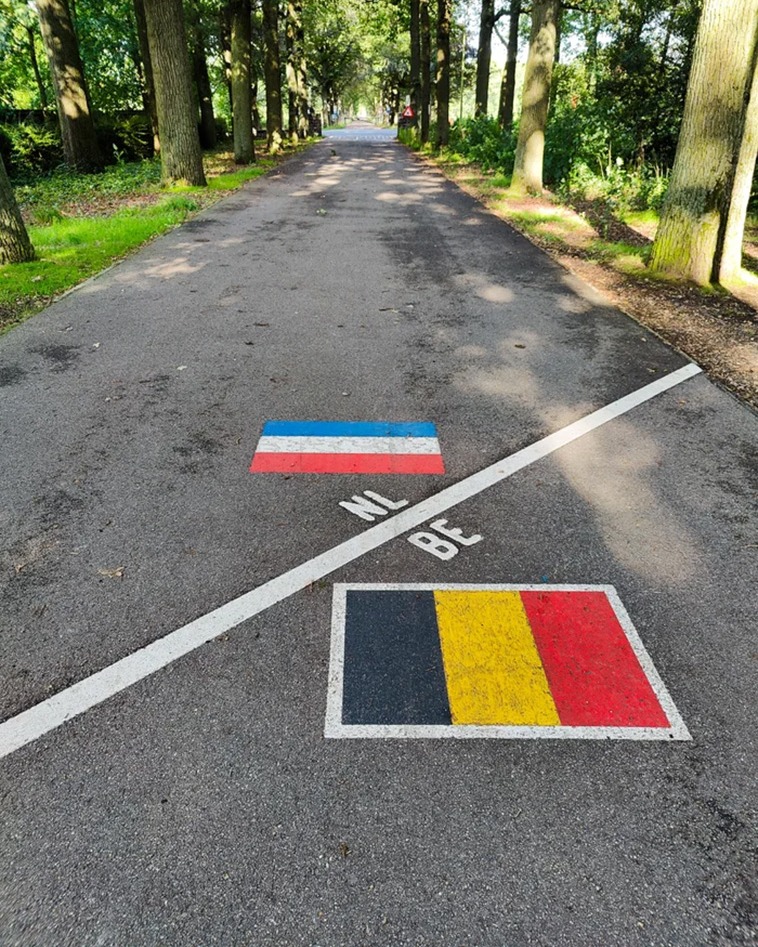
Crossing from Belgium into Germany is even less dramatic. Just a blue sign that says “Bundesrepublik Deutschland” and “Welcome to Germany. Please drive responsibly… or incredibly fast.”
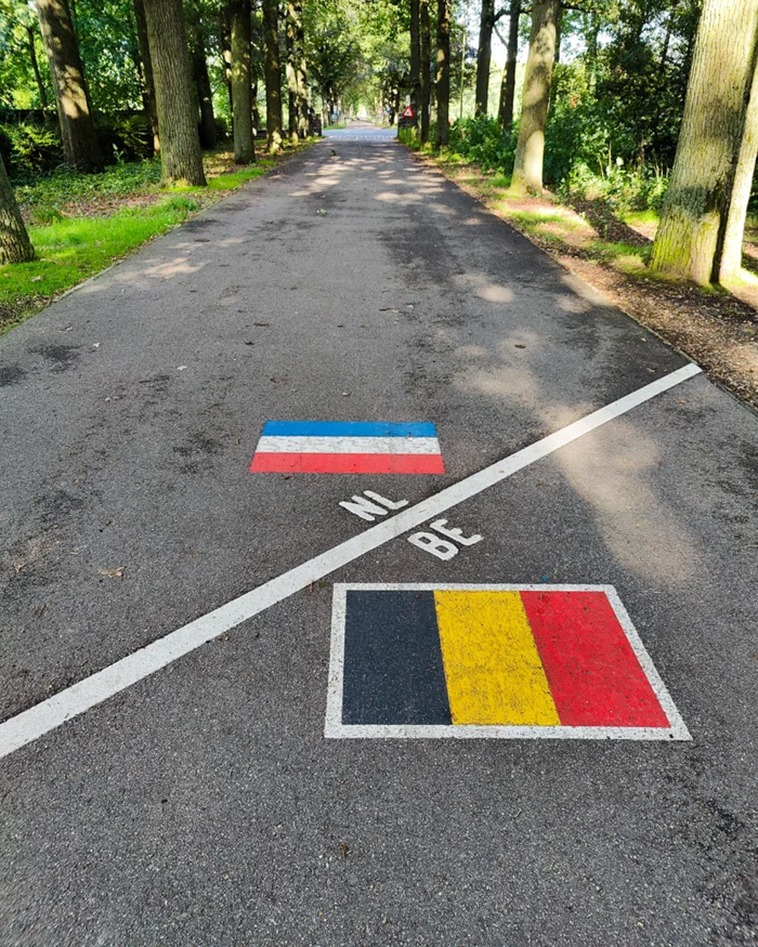
One moment you’re in Belgium. The next moment you’re in Germany. The only clue is a blue sign that feels more like a suggestion than a declaration.
No guards. No booths. No stern officials asking where you’re going. Not even a “Guten Morgen.”
I blinked, checked the GPS, and genuinely wondered if I’d just crossed an international border or accidentally driven past a particularly enthusiastic IKEA billboard.
From Skye to the Autobahn: A Study in Contrasts
Driving in Germany is… different.
A few days ago, I was on Skye, navigating single‑track roads where the speed limit is technically 60 mph but realistically “as fast as you can go before a sheep decides to ruin your day.” You spend half your time pulling into passing places, waving politely, and hoping the sheep don’t unionize.
On Skye, the biggest threat is a woolly traffic cone wandering into the road.
On the Autobahn, the biggest threat is everyone else.
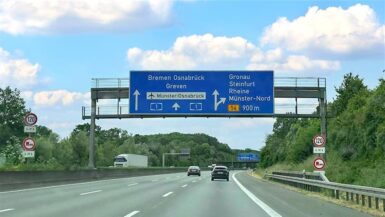
The Autobahn is what happens when a country collectively decides that speed limits are more of a philosophical concept than a rule. You merge onto the highway thinking you’re doing a respectable pace, only to be overtaken by a blur that might be a car or might be a small comet.
Skye teaches you patience. Germany teaches you humility.
🛣️ The Autobahn: A Spiritual Experience
Driving on the Autobahn is like being invited to a party where everyone else knows the choreography and you’re just trying not to step on anyone’s toes. There are speed limits… until suddenly there aren’t. There are lanes… until someone doing warp speed appears behind you and politely suggests, with their headlights, that you should move immediately.
I stayed in the right lane like the sensible, self‑preserving islander I am, watching in awe as cars overtook me so fast they probably arrived in Hamburg before I left Brussels.
But once you settle into it, the Autobahn is oddly soothing. Smooth, efficient, and strangely meditative — provided you don’t look in the rear‑view mirror too often.
☕ Rest Stops, Pretzels, and Existential Thoughts
Germany does rest stops exceptionally well. Clean, efficient, and stocked with enough pastries to make you question your loyalty to Belgian waffles.
I stopped for a pretzel the size of my face, a coffee brewed by someone who clearly understands long‑distance driving, and a moment to stretch my legs and wonder why I didn’t just take a train.
If you’re feeling adventurous, there are a few worthwhile detours:
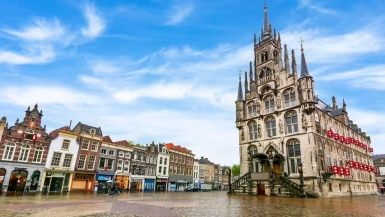
- Aachen — Germany’s first stop after the border, with a cathedral that looks like it was designed by someone trying to win an architecture competition.
- Cologne — A cathedral so massive it blocks out the sun and possibly your sense of direction.
- Münster — A charming university town with more bicycles than people.
I didn’t linger long, but each stop added a little colour to the journey.
The Long Northern Stretch
As the kilometres ticked by, the landscape shifted — Belgium’s dense edges giving way to Germany’s wide fields, wind turbines, and villages that look like they were arranged by someone with a strong sense of order.
The closer I got to Hamburg, the bigger the sky felt. Northern Germany has a way of looking both dramatic and peaceful at the same time — long horizons, open fields, and the kind of light that makes you want to pull over and take a photo you know won’t do it justice.
Rolling Into Hamburg
After nearly six hours, several coffees, and one or two moments where I questioned whether I’d accidentally joined a Formula 1 race, Hamburg finally appeared on the horizon.
The city rose up with its mix of modern glass, historic brick, and enough cranes to suggest it’s constantly reinventing itself. I rolled in tired, hungry, and slightly windblown from the Autobahn, but excited — because Hamburg has a way of waking you up even when you think you’re done for the day.
Tomorrow, the exploring begins. But for now? A deep breath, a good meal, and the satisfaction of having crossed a country in a single morning — border sign and all.
📝 Sidebar: The Autobahn Survival Guide (For People Who Recently Drove on Skye)
Now Featuring a Buc‑ee’s Comparison Because It’s Deserved**
Step 1: Forget Everything You Learned on Skye On Skye, the biggest danger is a sheep with poor impulse control. On the Autobahn, the biggest danger is a Volkswagen doing 220 km/h and driven by someone who thinks physics is optional.
Step 2: The Right Lane Is Your Safe Space Think of it as the “passing place” of Germany. Except instead of pulling over for a sheep, you’re pulling over for a Mercedes that appears behind you like a jump scare.
Step 3: Check Your Mirrors Every 0.7 Seconds If you don’t, you’ll miss the BMW materializing behind you like an angry Highland spirit.
Step 4: Don’t Take It Personally That car flashing its lights behind you isn’t saying “move.” It’s saying “MOVE NOW.” It’s cultural.
Step 5: Speed Limits Are… Suggestions Sometimes there’s a limit. Sometimes there isn’t. Sometimes there’s a limit but everyone ignores it because they’re German and late for something important.
Step 6: Rest Stops Are Sacred German rest stops are the closest thing Europe has to a Buc‑ee’s bathroom. Spotless. Efficient. A place where you walk in expecting chaos and instead find a restroom so clean you could perform minor surgery in it. No beaver mascot, sadly — but the pretzels make up for it.
Step 7: Accept That You Will Be Overtaken by a Van It will be white. It will be going 200 km/h. It will contain either a family of five or a suspicious amount of IKEA furniture. Do not question it.
Step 8: Celebrate Your Survival When you finally exit the Autobahn, take a moment. You’ve lived. You’ve grown. You’ve unlocked a new personality trait: respect for German engineering and mild fear of Volkswagens.