Hamburg is one of those cities that doesn’t just welcome you — it sweeps you up, hands you a pastry, points toward the water, and says, “Let’s make today interesting.” It’s a place where history and modernity sit shoulder‑to‑shoulder, where canals weave through red‑brick giants, and where the nightlife glows like it’s been plugged directly into the city’s heartbeat.
This is the story of one full day in Hamburg — a day fueled by carbs, caffeine, maritime swagger, and neon‑lit chaos. And yes, it was absolutely worth every step.
Morning: Carbs, Caffeine, and Questionable Self‑Control
There’s something deeply comforting about waking up in Hamburg. Maybe it’s the northern light filtering through the curtains, maybe it’s the faint hum of the city stretching awake, or maybe it’s the knowledge that breakfast here is not just a meal — it’s a lifestyle. Germans don’t dabble in breakfast. They commit to it with the enthusiasm of people who know the day ahead will require energy, patience, and possibly a strong constitution.
I wandered into a café that looked like it had been designed by someone who collects cozy atmospheres the way others collect rare coins. Warm lighting, wooden tables, the soft clatter of cups — it was the kind of place where you instantly feel like you’ve made a good decision. Then the server placed the breakfast basket in front of me, and I realized I had underestimated the situation entirely.
This wasn’t a basket. This was a carbohydrate summit.
Pretzel rolls, rye slices, seeded buns, and something that looked like it had been baked by a grandmother with very strong opinions about gluten. The bread alone could have fed a small marching band. And that was before the cheeses, cold cuts, jams, butter, and soft‑boiled eggs arrived like supporting cast members in a breakfast opera.
I tried to pace myself, but pacing is difficult when everything tastes like it was baked five minutes ago by angels with excellent time management. Every bite was a reminder that Germany has mastered the art of the morning meal. Even the coffee — dark, strong, and unapologetically bold — felt like it had been brewed with the intention of waking not just me, but my ancestors.
As I sat there, slowly transforming into a person made of bread, I watched Hamburg come alive outside the window. Cyclists zipped past with the confidence of people who have never known fear. Locals walked briskly, scarves tucked neatly, looking like they were heading somewhere important even if they weren’t. The city has a rhythm in the morning — steady, purposeful, quietly energetic.
By the time I finished breakfast, I felt both deeply satisfied and mildly concerned about my ability to walk. But that’s the beauty of Hamburg: it’s a city built for wandering. And after consuming enough carbs to power a small village, wandering felt like the only responsible choice.
Stepping outside, the cool air hit me like a polite reminder that I was no longer in the warm embrace of the café. The sky had that soft northern glow — bright but not blinding, crisp but not cold. It was the perfect backdrop for a day of exploring.
With caffeine buzzing through my veins and a bread‑based confidence swelling in my chest, I set off toward Speicherstadt. The city unfolded around me — canals glinting in the light, brick buildings rising like old friends, and the faint scent of the harbor drifting through the air. Hamburg was awake, and so was I. Well, mostly. The coffee was still doing its job.
Late Morning: Speicherstadt, Where Even the Warehouses Are Photogenic
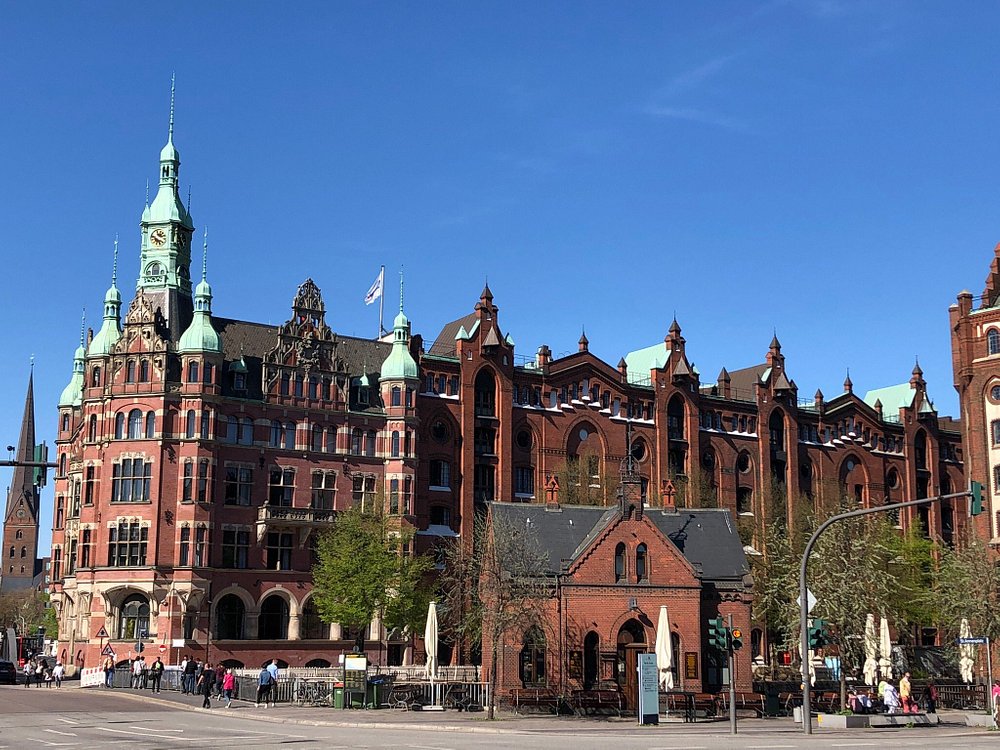
If breakfast was a warm hug, Speicherstadt was a full‑blown cinematic experience. There’s something surreal about stepping out of a cozy café and suddenly finding yourself in what looks like the set of a moody European detective series. Hamburg doesn’t ease you into its beauty — it just drops you into it and says, “Good luck keeping your jaw off the ground.”
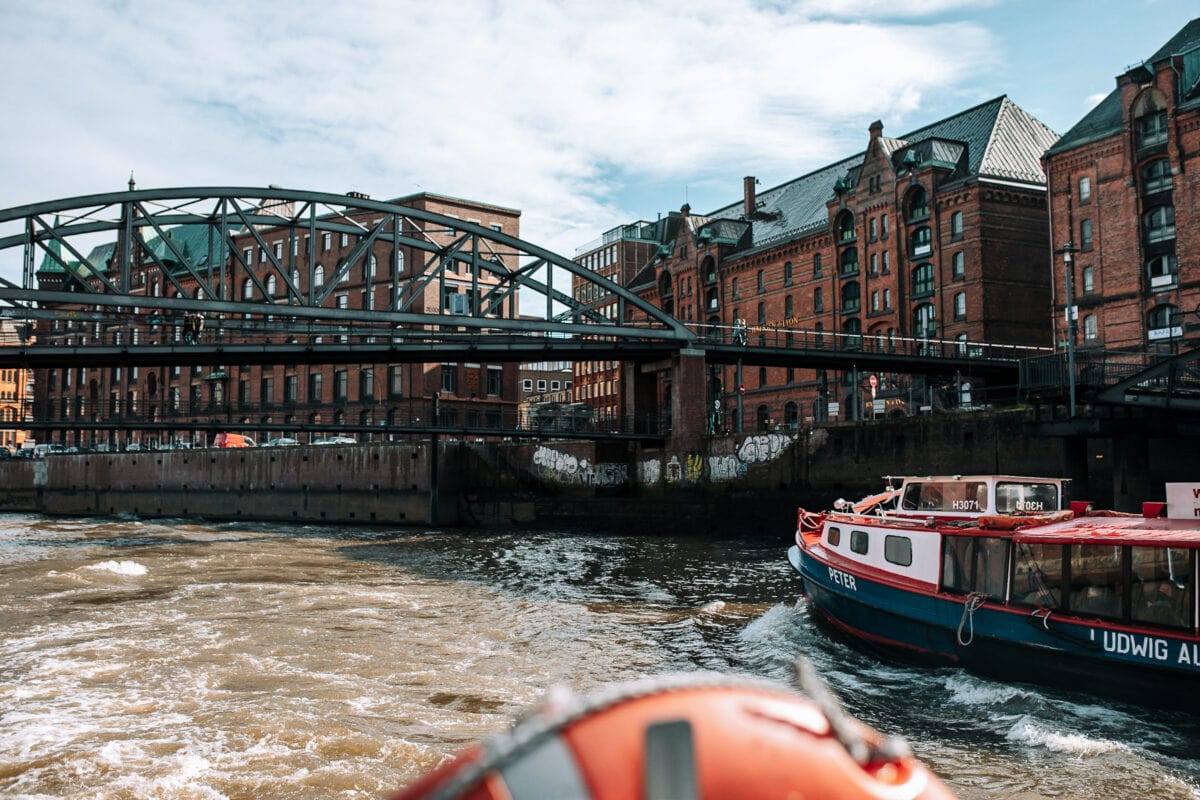
Speicherstadt is the world’s largest warehouse district, but calling it a “warehouse district” feels like calling the Grand Canyon a “nice hole.” These aren’t the beige, boxy storage units you pass on the highway. These are towering red‑brick cathedrals of commerce, lined up along narrow canals like they’re posing for a Renaissance painting. Every building has character. Every bridge has personality. Even the cobblestones feel like they’ve seen things.

Walking through Speicherstadt is like wandering through a living museum — except instead of velvet ropes and “Do Not Touch” signs, you get reflections dancing on the water and the faint echo of footsteps on iron bridges. The air smells faintly of river water and old stories. It’s the kind of place where you slow down without meaning to, because every corner demands a moment of appreciation.
And then there’s Miniatur Wunderland, tucked inside one of these brick giants like a secret waiting to be discovered. I’ll admit, I went in expecting a cute little model train setup. Something charming, maybe nostalgic. What I got instead was a full‑blown alternate universe. This place is enormous — a sprawling, meticulously crafted world where tiny trains zip through tiny cities, tiny airports operate with tiny precision, and tiny people live tiny lives that somehow feel more organized than my own.
You don’t just look at Miniatur Wunderland. You explore it. You lean in close to catch the details — a miniature wedding happening in a tiny park, a tiny fire brigade responding to a tiny emergency, a tiny Oktoberfest in full swing. The creators didn’t just build models; they built stories. And the longer you look, the more you find.

There’s something oddly comforting about watching a miniature world run so smoothly. No traffic jams. No delays. No existential dread. Just tiny trains doing their tiny jobs with admirable punctuality. It’s whimsical, impressive, and slightly humbling. I left feeling both delighted and mildly inadequate.
Back outside, Speicherstadt continued to work its magic. The late‑morning light hit the brick facades just right, turning the whole district into a warm, glowing labyrinth. Tour boats drifted by, their passengers snapping photos like their lives depended on it. Cyclists zipped across bridges with the confidence of people who know exactly where they’re going. Meanwhile, I wandered with the confidence of someone who absolutely did not — but was having a great time anyway.
Speicherstadt is the kind of place that makes you fall in love with a city before you even realize it’s happening. It’s historic without being stuffy, beautiful without being fragile, and atmospheric without trying too hard. By the time I left, I felt like I’d stepped out of a dream — the kind that lingers long after you wake up.
Midday: Fischbrötchen and Seagulls With Attitude
Leaving the red‑brick charm of Speicherstadt behind, I followed the flow of people and the faint scent of saltwater toward Hamburg’s harbor. The closer you get, the more the city shifts — the architecture opens up, the air gets brighter, and suddenly everything feels bigger, louder, and more alive. Hamburg’s port isn’t just a scenic backdrop; it’s the city’s beating heart.
The harbor is a place where everything moves. Ships glide by like floating skyscrapers, cranes stretch into the sky like mechanical dinosaurs, and the water churns with the constant rhythm of arrivals and departures. It’s industrial, yes, but also strangely beautiful — a reminder that cities are living things, always in motion.
And then there’s the food. Specifically, the Fischbrötchen.
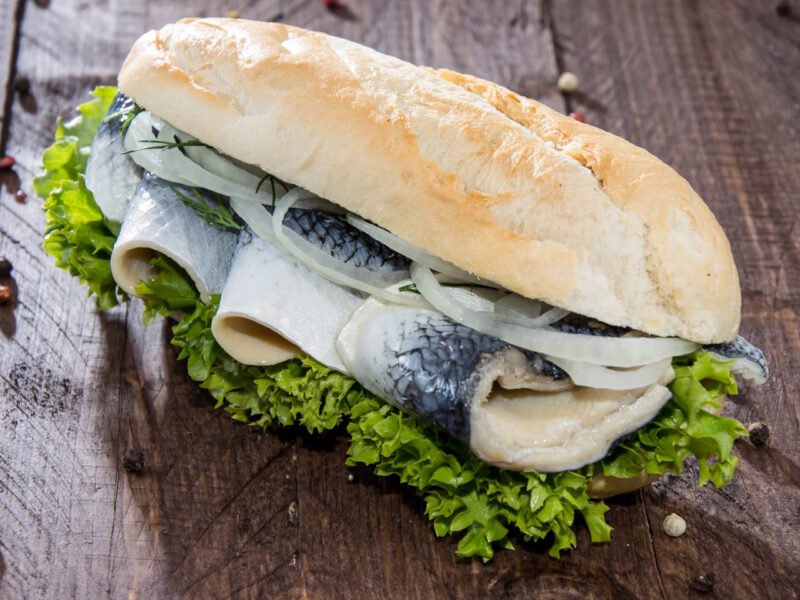
If you haven’t had a Fischbrötchen, imagine the simplest fish sandwich in the world — and then imagine it being so fresh and so iconic that locals defend it with the kind of passion usually reserved for sports teams and grandmothers’ recipes. It’s just fish, onions, pickles, and a soft roll, but somehow it’s perfect.
I ordered one from a harbor stand that looked like it had been serving Fischbrötchen since the dawn of time. The vendor handed it to me with the solemnity of someone passing down a family heirloom. I took a bite, and instantly understood why Hamburgers treat this sandwich like a cultural treasure. It was fresh, tangy, and unapologetically honest — the kind of food that doesn’t need to impress you because it already knows it’s good.
As I ate, a seagull perched nearby stared at me with the intensity of a disappointed parent. Hamburg’s seagulls are bold, opinionated, and apparently very invested in your lunch choices. This one looked like it was evaluating my technique. I tried to ignore it, but it was difficult to enjoy my sandwich while being silently judged by a bird with strong opinions.
The harbor is the perfect place to linger. People stroll along the promenade, snapping photos of ships and skyline views. Street musicians play everything from acoustic guitar to accordion. Tour boats come and go, their loudspeakers announcing departures in multiple languages. It’s chaotic, but in a charming, maritime way.
I found a spot along the water and watched the city move. Tugboats pushed massive vessels with surprising grace. Ferries zipped back and forth like aquatic taxis. The Elbphilharmonie shimmered in the distance, its glass facade catching the midday light like a beacon.
Hamburg’s harbor isn’t just a place to see — it’s a place to feel. The energy, the movement, the salty breeze, the sound of gulls arguing overhead — it all blends into an atmosphere that’s uniquely, unmistakably Hamburg.
And with a Fischbrötchen in hand (and a seagull still judging me), I felt like I was exactly where I was supposed to be.
Afternoon: A Harbor Cruise and a Crash Course in Maritime Bragging Rights
After soaking in the harbor from land, it was time to see it from the water — because if Hamburg has one love language, it’s showing off its port. And honestly? It has every right to. This harbor is massive, impressive, and full of stories. A cruise is practically mandatory.
I boarded a tour boat that looked like it had seen decades of curious travelers and questionable fashion choices. The guide greeted us with the enthusiasm of someone who genuinely loves boats — and was determined to make sure we loved them too. As we pulled away from the dock, he launched into a rapid‑fire explanation of shipping logistics, container capacities, and maritime history.
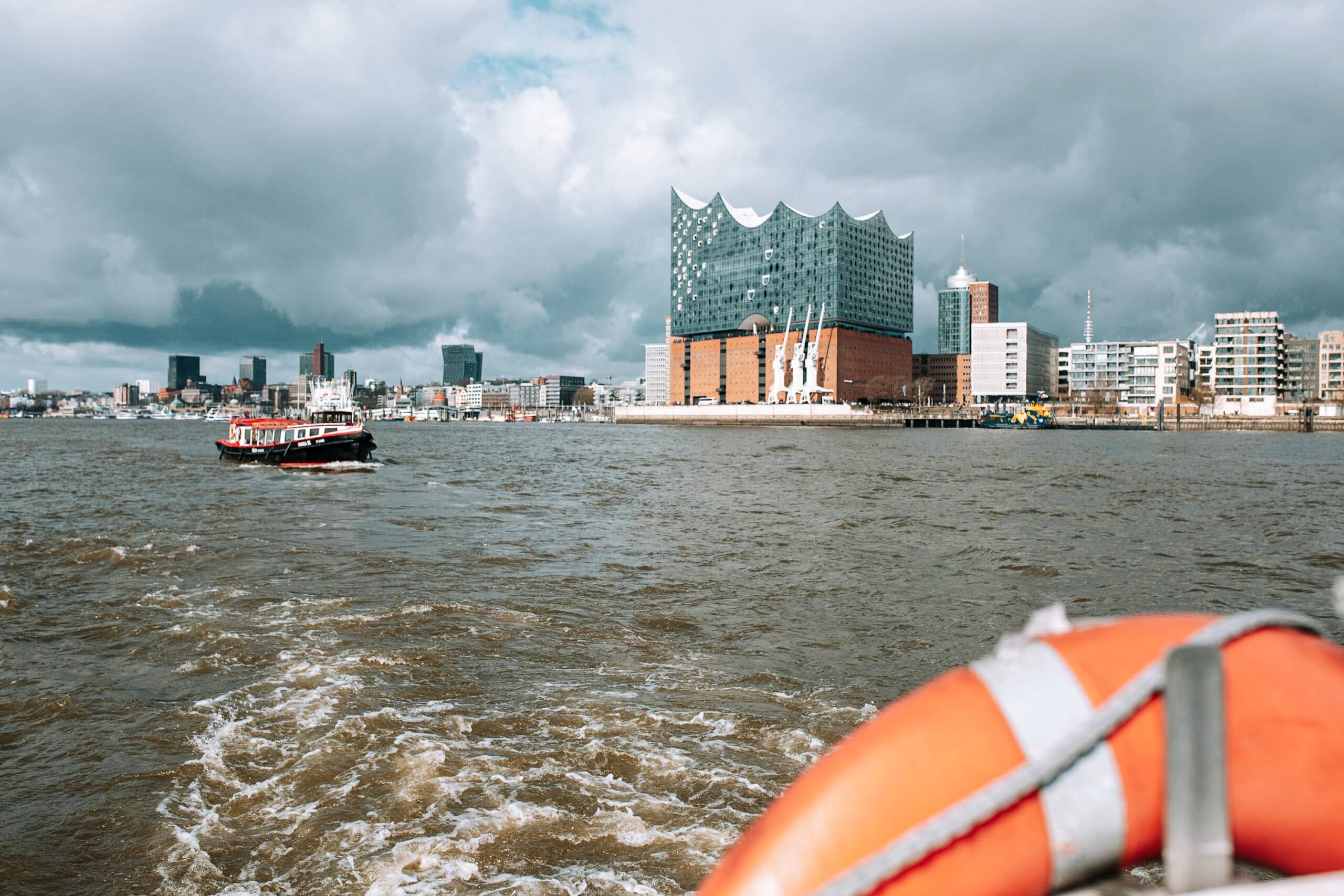
I nodded along like I understood any of it. I did not. But the views needed no translation.
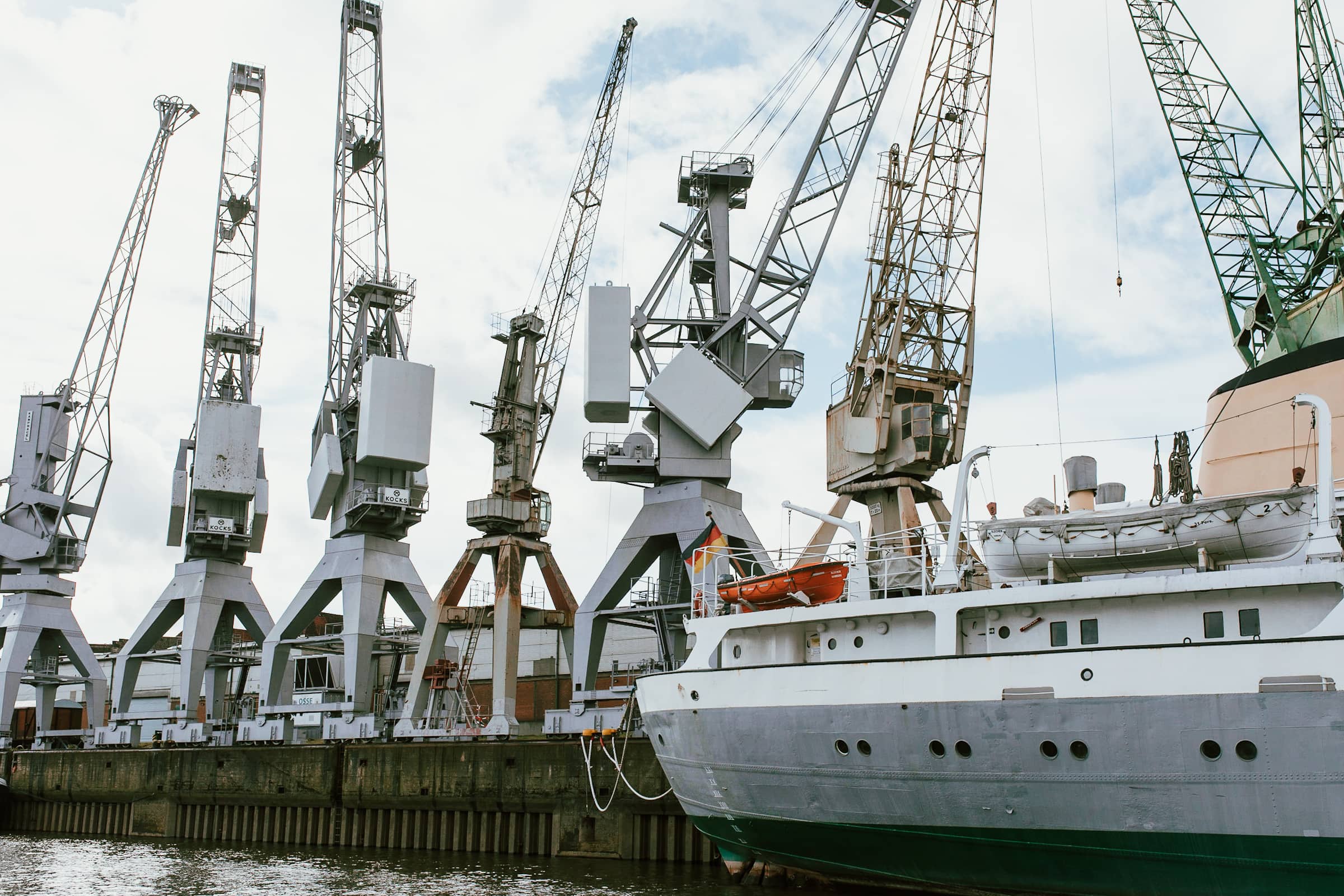
The harbor unfolded around us like a living, breathing machine. Massive container ships towered overhead, their hulls painted in bold colors that looked almost cheerful despite their size. Cranes moved with slow, deliberate precision, lifting containers like they were playing a giant game of Tetris. Tugboats zipped around with surprising agility, guiding vessels ten times their size.
There’s something humbling about being on a small boat surrounded by these giants. It makes you appreciate the scale of global trade — and also makes you wonder how anything ever gets delivered on time.
And then, rising above the water like a futuristic crown, was the Elbphilharmonie.
If Speicherstadt is Hamburg’s historic soul, the Elbphilharmonie is its bold, modern heartbeat. The building is a masterpiece of glass and curves, perched atop an old warehouse like a spaceship that decided to settle down and pursue a career in classical music. Its wavy roofline reflects the sky, the water, and the city around it, changing color with the light.
From the water, it’s even more impressive. It looks like a giant glass wave frozen mid‑crash — elegant, dramatic, and slightly surreal. The guide explained its acoustics, its design, its cost (which, judging by his tone, was a topic of local debate), and its role as one of the most iconic concert halls in the world.
I didn’t catch every detail, but I caught the vibe: Hamburg is proud of this building. And honestly? It should be.
As the boat continued through the harbor, we passed shipyards, dry docks, and industrial areas that felt like the city’s backstage. Workers moved with practiced efficiency, welding, lifting, repairing — keeping the maritime machine running. It was gritty, real, and fascinating.
By the time the cruise ended, I felt like I had taken a crash course in maritime bragging rights. Hamburg doesn’t just have a harbor — it has the harbor. And it’s more than happy to show it off.
Stepping back onto land, I felt a renewed appreciation for the city’s relationship with water. Hamburg isn’t just near the water — it’s shaped by it, defined by it, and deeply connected to it.
And with the afternoon sun warming the streets, it was time to explore a different side of the city.
Late Afternoon: St. Pauli, Where Cool People Roam Freely
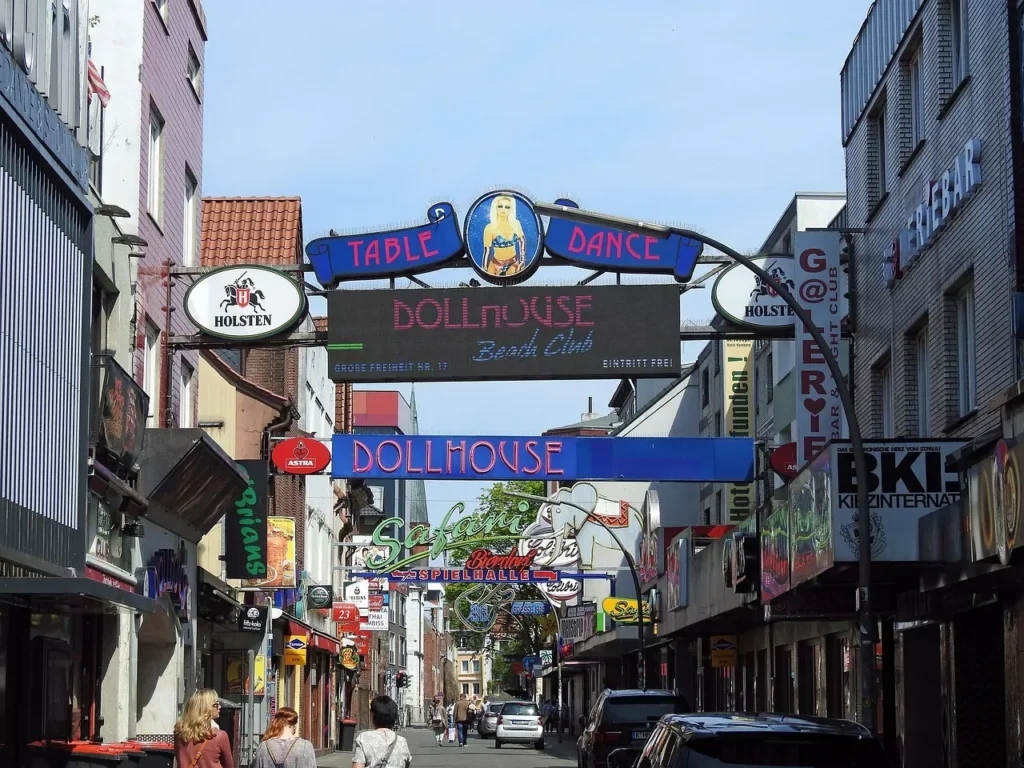
Leaving the harbor behind, I wandered toward St. Pauli, a neighborhood that feels like Hamburg’s creative brain — a place where artists, musicians, students, and free spirits coexist in a glorious swirl of color, sound, and personality. If Speicherstadt is polished and historic, St. Pauli is raw, vibrant, and unapologetically itself.
The transition is immediate. One moment you’re surrounded by maritime industry; the next, you’re walking past murals that stretch across entire buildings, cafés with mismatched furniture spilling onto the sidewalks, and shops selling everything from vintage jackets to handmade jewelry to vinyl records that look older than the city itself.
St. Pauli has an energy that’s hard to describe but impossible to ignore. It’s the kind of place where you can wander aimlessly and still feel like you’re exactly where you’re supposed to be.
I ducked into a café that looked like it had been decorated by someone who couldn’t decide between “cozy living room” and “art student’s studio,” so they chose both. The tables were mismatched, the chairs were mismatched, even the mugs were mismatched — and somehow it all worked. The air smelled like espresso and creativity. People tapped away on laptops, sketched in notebooks, or chatted animatedly about things that sounded important even if I didn’t understand a word.
The coffee was strong, the music was indie, and the atmosphere said, “Stay awhile.” So I did.
After recharging, I wandered deeper into the neighborhood. Street art covered every available surface — walls, doors, utility boxes, even the occasional trash can. Some pieces were political, some were abstract, some were just plain funny. It felt like walking through an open‑air gallery curated by the city’s collective imagination.
St. Pauli is also home to the famous FC St. Pauli football club, whose skull‑and‑crossbones logo is practically a local religion. You see it everywhere — on shirts, stickers, flags, even tattoos. The team is known not just for its games, but for its fiercely loyal fanbase and its strong stance on social issues. It’s more than a club; it’s a community.
As I wandered, I passed quirky boutiques, secondhand shops, and bars that looked like they had stories to tell. The people here dress like they woke up and decided to express themselves through fabric — and succeeded. There’s a sense of freedom in the air, a feeling that you can be whoever you want and no one will bat an eye.
St. Pauli is gritty, yes, but it’s also warm. It’s chaotic, but in a way that feels intentional. It’s the kind of neighborhood that invites you in, hands you a coffee, and says, “Relax. You’re one of us now.”
By the time I left, I felt energized, inspired, and slightly more stylish just by proximity. And with evening approaching, it was time to find dinner — and maybe a little adventure.
Evening: Dinner That Looks Questionable but Tastes Like a Hug
As the sun dipped lower, the city shifted again — the light softened, the air cooled, and Hamburg began to glow in that golden, early‑evening way that makes everything look like it belongs in a travel magazine. It was the perfect time for dinner, and I knew exactly what I wanted: something traditional, something hearty, and something that would make me feel like I was truly in northern Germany.
Enter Labskaus.
If you’ve never heard of Labskaus, imagine a dish invented by sailors who needed something filling, practical, and capable of surviving long voyages. It’s a mix of corned beef, potatoes, and beetroot, often topped with a fried egg and served with pickles and herring. It’s not pretty. In fact, it looks like something you’d eat during a storm while clinging to the side of a ship. But looks can be deceiving.
I found a restaurant that specialized in traditional Hamburg cuisine — the kind of place with wooden tables, nautical decor, and a menu that reads like a love letter to the sea. When the Labskaus arrived, I hesitated for a moment. It was… pink. And lumpy. And topped with an egg that stared at me like it knew I was judging it.
But then I took a bite.
And suddenly, everything made sense.
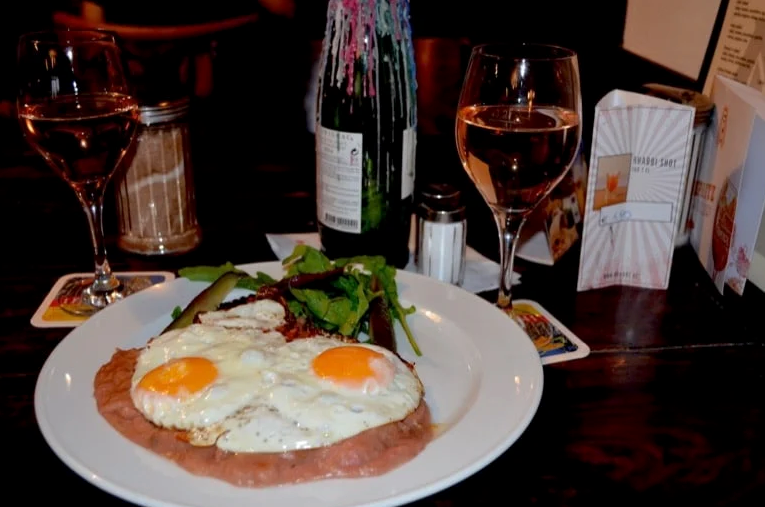
Labskaus is comfort food in disguise. It’s warm, savory, slightly tangy from the beetroot, and surprisingly satisfying. It tastes like a hug from someone who doesn’t do hugs often but means it when they do. It’s the kind of dish that makes you feel grounded, nourished, and vaguely nautical.
To restore balance to the universe, I followed it with a Franzbrötchen, Hamburg’s beloved cinnamon‑swirled pastry. Imagine a croissant and a cinnamon roll had a very successful child — flaky, buttery, sweet, and slightly caramelized. It’s the kind of pastry that makes you question why it hasn’t taken over the world.
As I ate, the restaurant buzzed with the gentle hum of evening conversations. Couples chatted over wine, families shared plates, and solo travelers like me savored their meals while planning the rest of the night. Outside, the city lights flickered on one by one, reflecting off the canals like scattered stars.
Dinner in Hamburg isn’t just about food — it’s about atmosphere. It’s about slowing down, savoring the moment, and letting the city wrap around you like a warm blanket. And with a full stomach and a happy heart, I stepped back into the evening air, ready for whatever came next.
Nightfall: Beer Halls, Lederhosen, and the Sudden Urge to Sing Along

Nightfall in Hamburg has a way of sneaking up on you. One moment you’re strolling through the city, admiring the way the evening light glows against the canals, and the next you’re hearing the distant clink of beer steins and the unmistakable hum of people who have decided that tonight is going to be a good night. Hamburg may not be Bavaria, but it absolutely knows how to throw a beer‑hall‑style party — and I was more than ready to join in.
I followed the sound of laughter and music until I reached a beer hall that looked like it had been plucked straight out of a postcard. Warm light spilled from the windows, and the wooden sign above the door swung gently in the breeze, as if beckoning me inside. The moment I stepped through the door, I was hit with a wave of warmth, noise, and the unmistakable aroma of hops and hearty food. It was like walking into a celebration already in progress.
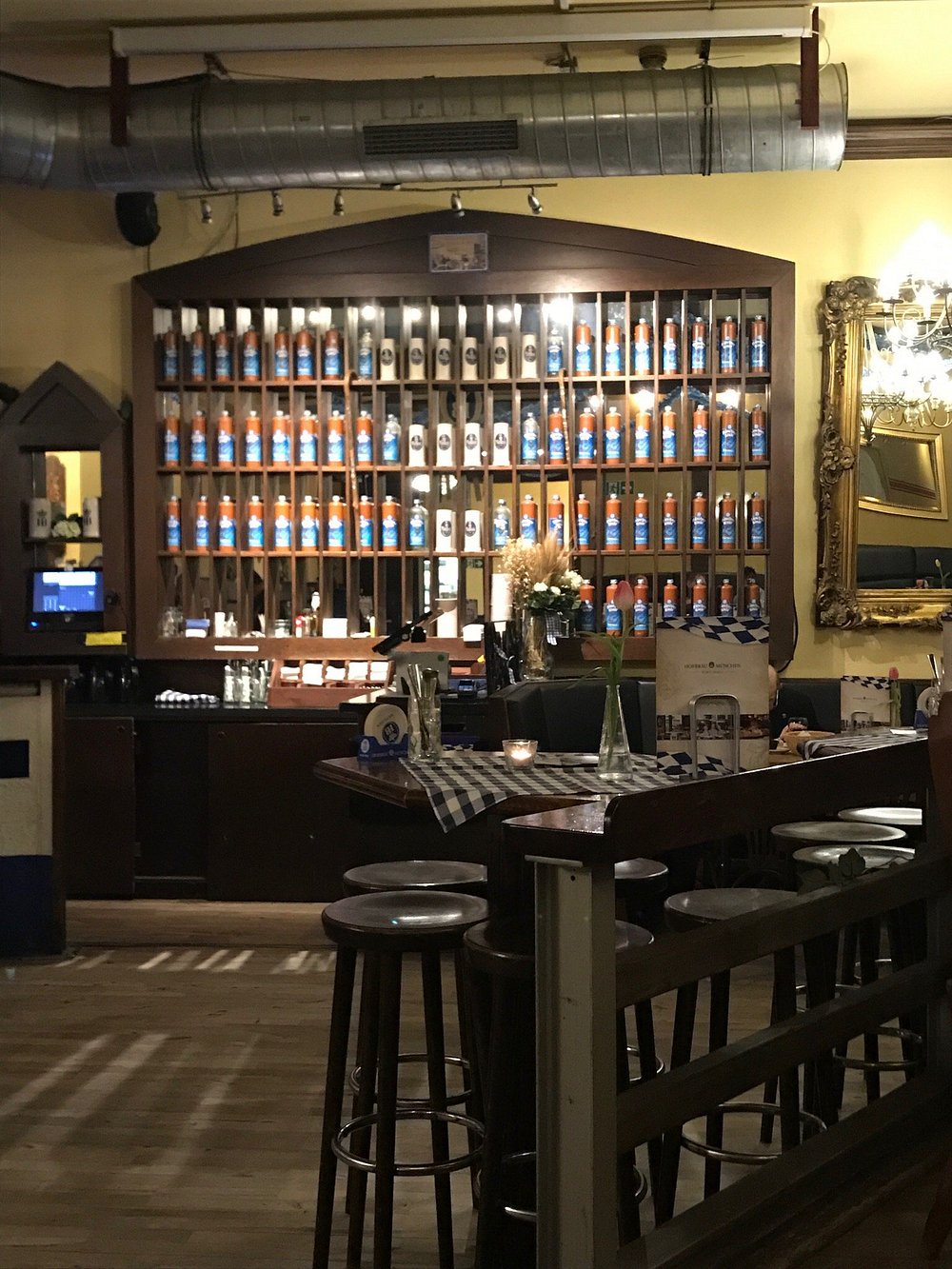
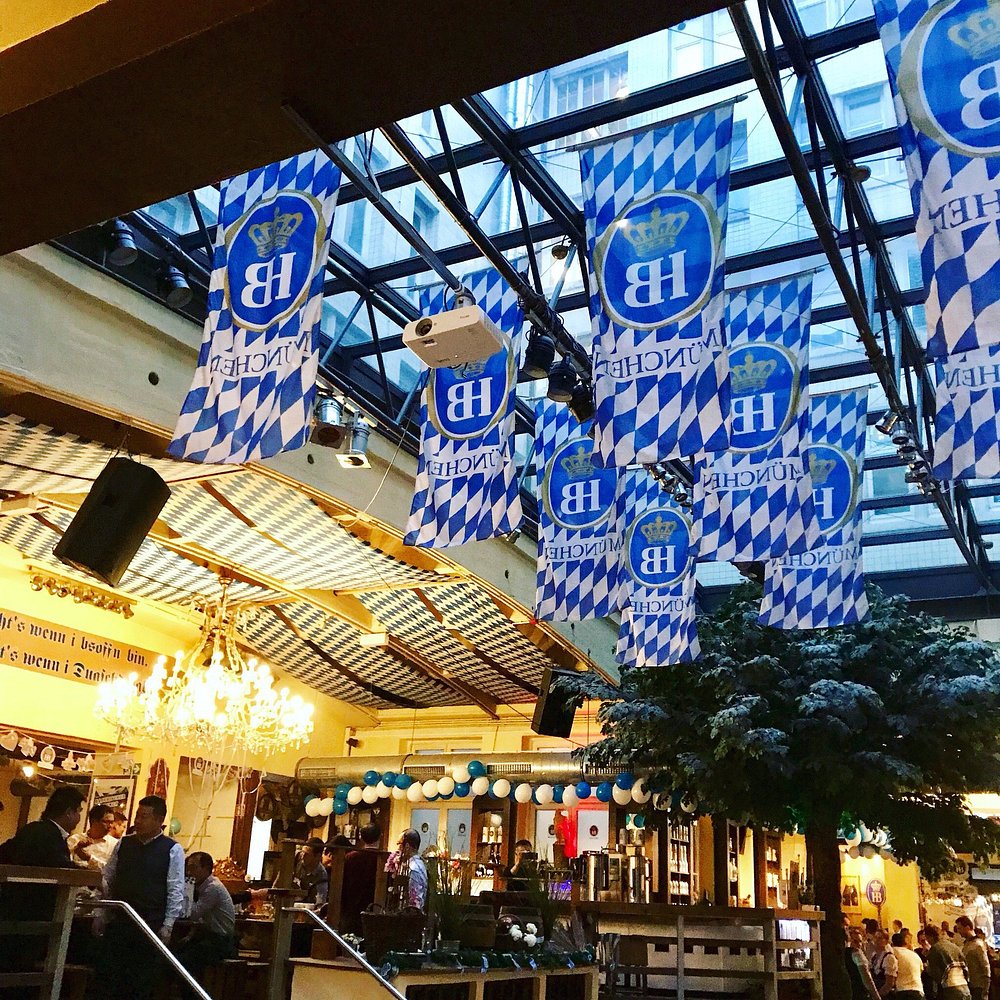
Long wooden tables stretched across the room, filled with people who looked like they had been friends for years — even if they’d only met an hour ago. Beer halls have that effect. Strangers become drinking buddies, drinking buddies become confidants, and everyone becomes part of the same joyful, slightly chaotic atmosphere. The air buzzed with conversation, laughter, and the occasional burst of singing from a table that had clearly decided to take musical matters into their own hands.
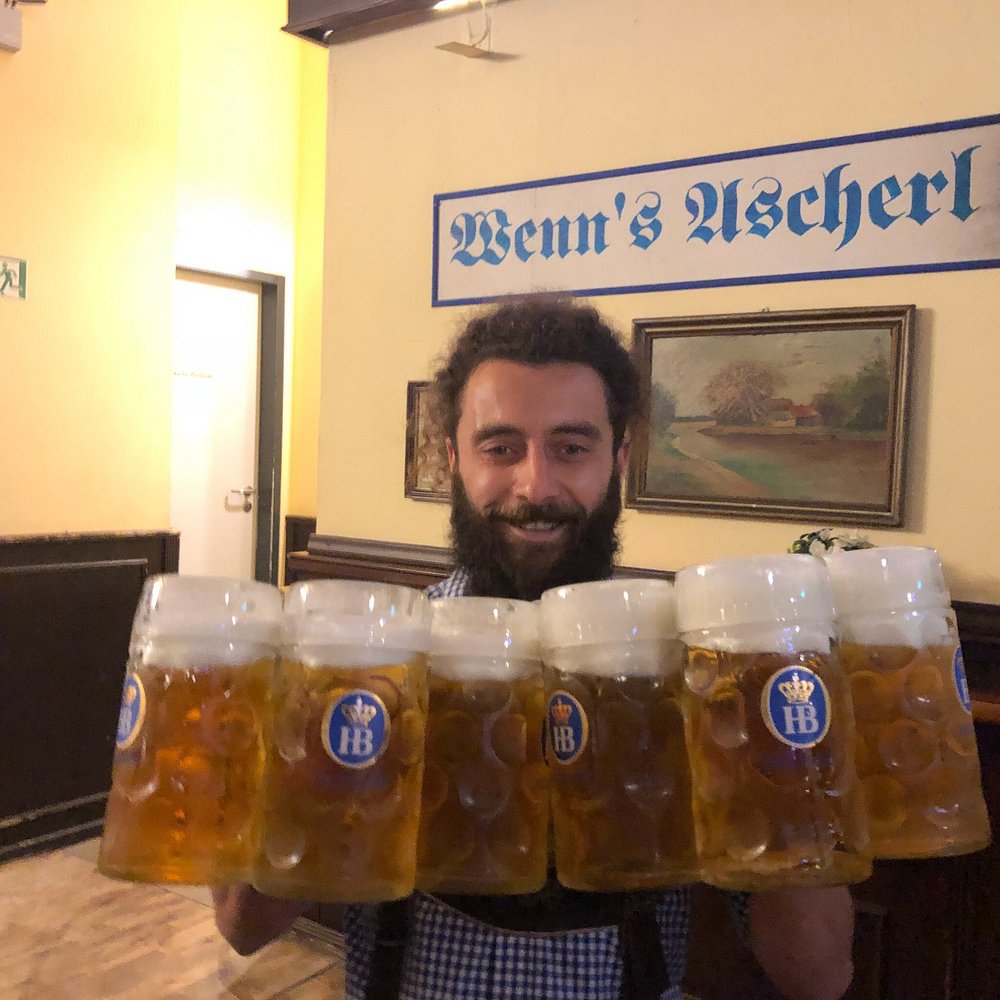
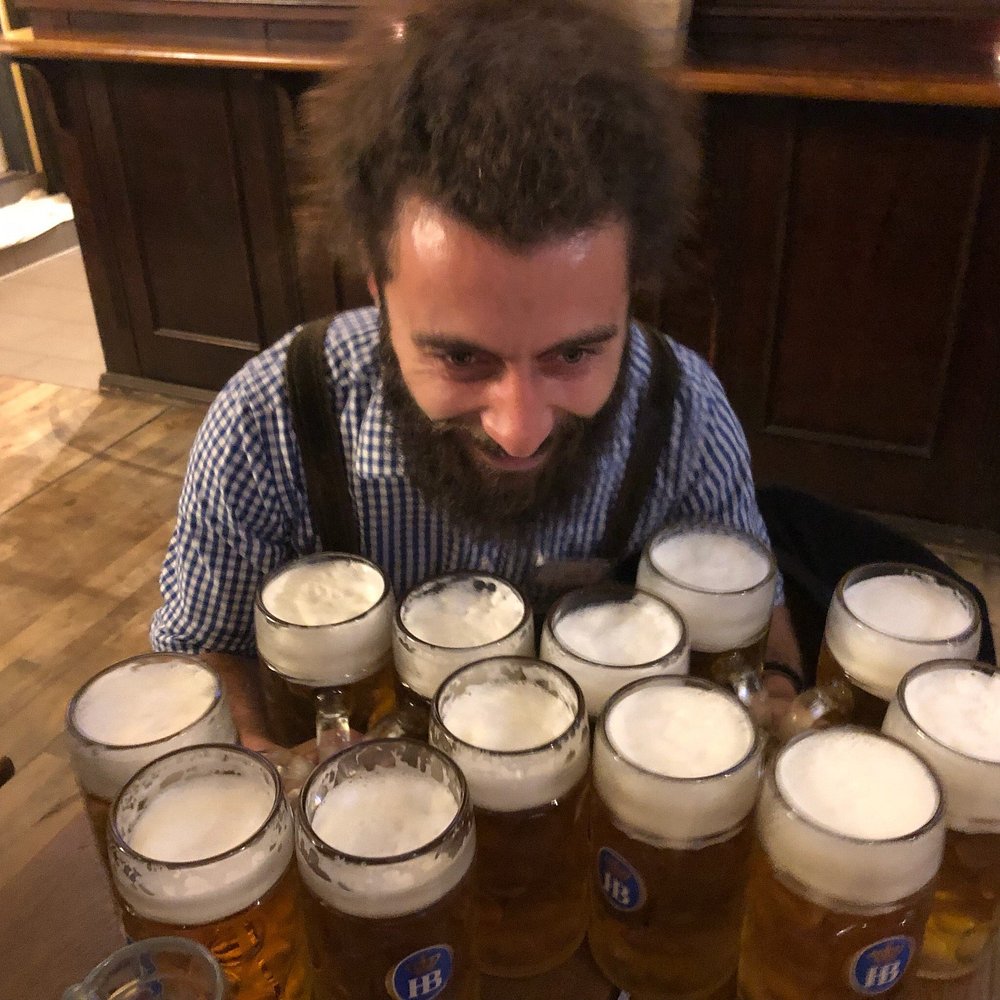
The staff moved through the room with the grace and confidence of seasoned performers. Some wore lederhosen, others wore dirndls, and all of them carried beer steins the size of small buckets with one hand like it was nothing. I watched one server deliver six full steins at once without spilling a drop, and I’m still not convinced it wasn’t witchcraft.

I found a spot at a communal table, and within minutes, the people around me had welcomed me like an old friend. That’s the magic of beer halls — you don’t need to know anyone to feel like you belong. Someone slid a menu toward me, someone else recommended their favorite beer, and before I knew it, I had a frothy stein in front of me that looked like it could double as a workout weight.
The first sip was everything a good German beer should be — crisp, cold, and dangerously easy to drink. The kind of beer that makes you understand why people write songs about beer. Speaking of songs, the band in the corner struck up a lively folk tune, and the room erupted into clapping, stomping, and enthusiastic singing. I didn’t know the words, but that didn’t stop me from joining in. When in Hamburg, you sing along — even if you’re just making confident vowel sounds.
As the night went on, the atmosphere only grew more electric. People toasted to everything — to friendship, to travel, to the band, to the weather, to the fact that it was Tuesday (or maybe Wednesday; no one seemed entirely sure). The beer flowed freely, the music grew louder, and the sense of camaraderie wrapped around the room like a warm blanket.
By the time I stepped back outside, the cool night air hit me with a refreshing jolt. The city lights shimmered on the water, and the distant pulse of the Reeperbahn called like a neon siren. Hamburg wasn’t done with me yet — not even close.