
The Day the Ink Ran Red: 1638 and the Birth of the Covenanters
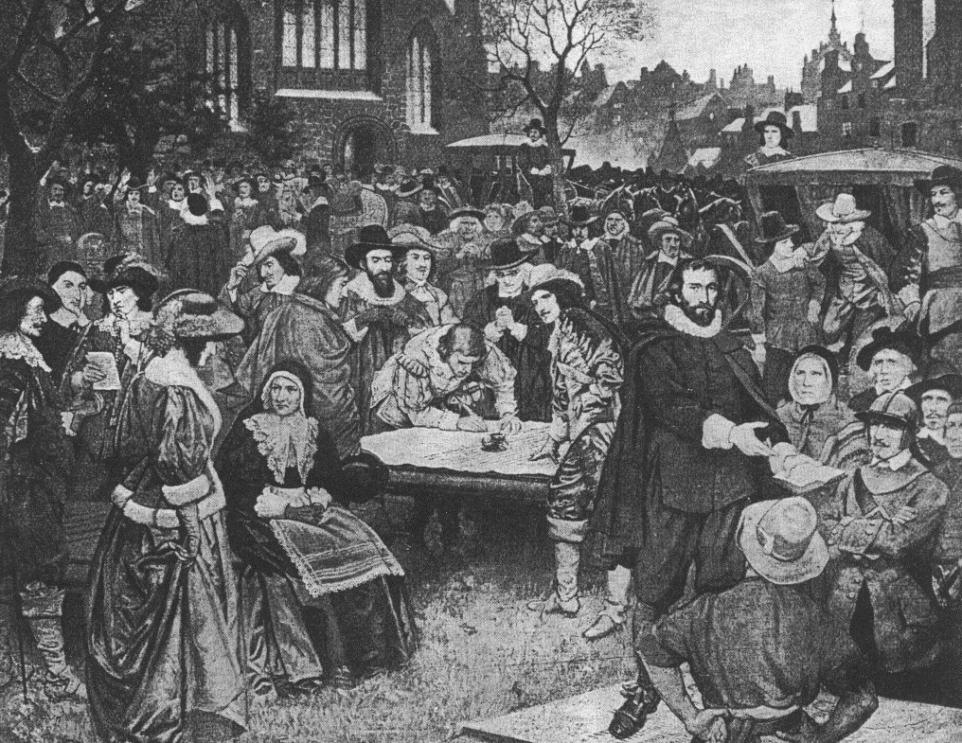
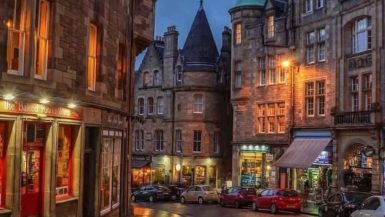
In the long, mist-shrouded memory of Scotland, there are dates that function as mere footnotes and dates that act as seismic shifts. February 28, 1638, is the latter. It was a Wednesday—cold, likely damp in the way only an Edinburgh winter can be—and the air inside Greyfriars Kirkyard was thick with something heavier than the North Sea fog.
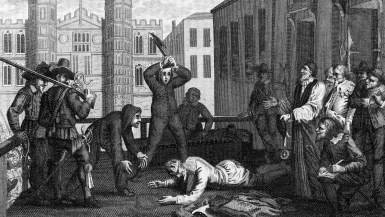
Thousands had descended upon the capital. They weren’t there for a festival or a market. They were there to sign a document that would effectively tell the most powerful man in the three kingdoms that his “Divine Right” stopped at the Scottish border. This was the signing of the National Covenant, a moment of collective defiance so potent it would eventually cost a King his head and drown the British Isles in a decade of civil war.
The Spark: A Prayer Book and a Stool
To understand why thousands of Scots were willing to risk a charge of high treason on that February day, we have to look back a few months to a riot started by a vegetable seller.
King Charles I, a man whose talent for misreading the room was rivaled only by his stubbornness, wanted uniformity. He believed that as King, he was the head of the Church, and that the “fractious” Scots should worship exactly like the English. In 1637, he ordered the introduction of a new Liturgy—a prayer book that felt, to the Presbyterian Scots, suspiciously like “Popery” in disguise.
When the Dean of Edinburgh attempted to read from this new book at St. Giles’ Cathedral, a woman named Jenny Geddes didn’t just complain; she threw her cuttie-stool straight at his head. That stool didn’t just hit the Dean; it hit the monarchy. The riot sparked a national movement. The Scots weren’t just protecting their Sunday service; they were protecting their soul.
The Scene at Greyfriars
By February 28, the tension had reached a breaking point. The National Covenant had been drafted by Archibald Johnston of Wariston and Alexander Henderson. It was a brilliant, if lengthy, piece of legal and religious prose. It reaffirmed Scotland’s commitment to the reformed faith and explicitly rejected any “innovations” to the kirk that hadn’t been approved by free Parliaments and General Assemblies.
The setting of Greyfriars Kirkyard was symbolic. Surrounded by the graves of their ancestors, the leaders of the movement—nobles, ministers, and commoners—gathered. The document was first read aloud inside the kirk itself. Then, it was carried outside into the graveyard.
The atmosphere was electric. This wasn’t a dry legal ceremony; it was a revival. Men and women wept as they stepped forward to sign. Some, gripped by a fervor that borders on the cinematic, were said to have opened their veins to sign in their own blood. While historians debate the literal frequency of the “blood signatures,” the metaphor remains accurate: they were pledging their lives.
By the time the sun set over the Edinburgh skyline, the Covenant was no longer just a piece of parchment. It was a national identity.
The “Nemo Me Impune Lacessit” Factor
There is a specific Scottish grit that defines this era. The motto “Nemo Me Impune Lacessit”—the idea that you cannot provoke the thistle without getting pricked—was never more apparent than in 1638.
The Covenanters weren’t rebels in the traditional sense; they saw themselves as the ultimate loyalists—not to a man, but to a contract between God and the people. They argued that if the King broke his side of the bargain (protecting the true faith), the people were no longer bound to obey him in that matter. This was radical stuff. It pre-dated the Enlightenment by a century, suggesting that a ruler’s power was conditional, not absolute.
From Ink to Iron: The Bishops’ Wars
Charles I, predictably, was livid. To him, the Covenant was a “Standard of Rebellion.” He refused to back down, and the Scots refused to budge. The result was the Bishops’ Wars (1639–1640).
The King raised an army to crush the Covenanters, but he had a problem: he had no money and a very disgruntled English Parliament. The Scots, meanwhile, were highly organized. Many Scottish soldiers had recently returned from the Thirty Years’ War in Europe; they were professional, battle-hardened, and fighting for their homes.
The Covenanter army, led by Alexander Leslie, didn’t just defend Scotland; they marched into England and occupied Newcastle. This forced Charles to call the “Long Parliament” to raise funds, setting off the chain of events that led directly to the English Civil War. Without the stubbornness of the Scots on February 28, the entire history of the British monarchy might look very different.
The Killing Time
While the signing in 1638 felt like a moment of triumph, the 17th century rarely ended in a happily-ever-after. After the monarchy was restored in 1660 under Charles II, the state turned its vengeance toward the Covenanters.
The later 1600s became known as “The Killing Time.” The Covenanters were forced into the hills, holding secret “Conventicles” (illegal open-air church services) in the misty glens and high moors. If they were caught and refused to abjure the Covenant, they were often executed on the spot.
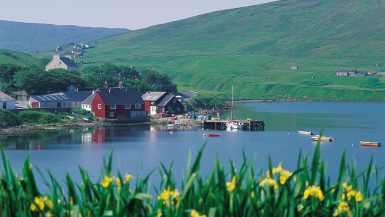
This period solidified the Covenanter as a folk hero—the “Wanderer” (or Stravaiger) who took to the wilds to keep their conscience clean. To this day, if you hike through the hills of Dumfries and Galloway or the Pentlands, you will find lonely monuments to these individuals—stone markers in places where it seems impossible that an army could ever find a soul.
Why It Matters Today
When we “stravaig” through Scotland today, we aren’t just walking over heather and granite; we are walking over the map of this struggle.
The 1638 Covenant represents the moment Scotland decided it would not be absorbed into a generic, centralized identity. It was a demand for accountability—a theme that resonates through your recent explorations of Charles I and the modern monarchy. It reminds us that “wandering beyond limits” isn’t just about travel; it’s about the intellectual and spiritual limits a people are willing to push against.
The signatures at Greyfriars changed the trajectory of the world. They helped birth the idea of constitutional government and proved that a unified, passionate population could check the power of an absolute ruler.
So, next time you find yourself in Edinburgh, skip the shops on the Royal Mile for a moment. Walk down to Greyfriars. Stand among the lopsided headstones and imagine that February day—the scratching of quills, the murmur of thousands, and the birth of a movement that refused to be provoked with impunity.