
The longship moved through the waters of the Minch with a steady, deliberate rhythm, its hull rising and falling against the swell as if answering the slow pulse of the northern sea. The morning light was thin, filtered through a veil of mist that clung to the horizon. Ahead, the coastline of Waternish emerged in muted shapes: cliffs rising in dark, jagged lines, moorland stretching inland in a muted tapestry of heather and stone. The land seemed to wait in silence, untouched and unclaimed, its contours shaped by wind and time rather than human hands.
The men aboard the vessel rowed without speaking. Their breath drifted into the cold air, mingling with the sea spray. Salt clung to their hair and beards, and the wooden oars creaked with each pull. They had traveled far, following currents and instinct, driven by hunger, ambition, and the restless urge that had carried their people across oceans. Now, as the longship angled toward a natural inlet near the mouth of Loch Bay, the coastline sharpened into focus. No smoke rose from hearths. No boats rested on the shore. The land was quiet, but not empty—alive with the movement of deer in the hollows, the circling of seabirds, the distant crash of waves against rock.
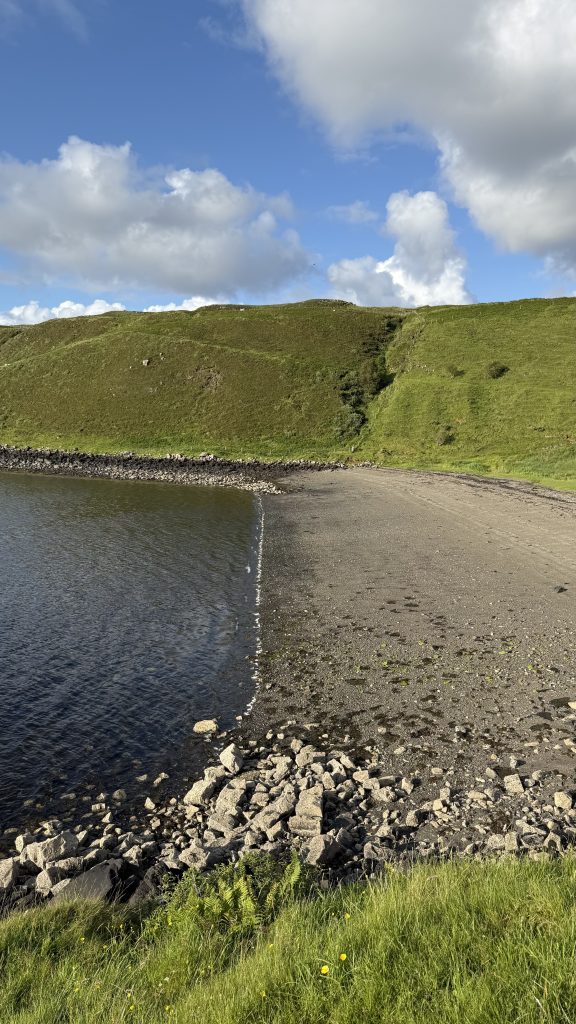
The longship slid into the shallows, and the men leapt into the cold water, pulling the vessel onto the pebbled beach. Their boots sank into wet sand as they steadied the hull. The air smelled of kelp and peat, and the wind carried the faint scent of heather from the slopes above. They moved with purpose, but without haste. This was not a raid. It was an arrival—an attempt to carve a foothold in a land that seemed both harsh and promising.
They climbed the rise above the bay, their steps muffled by the thick heather. From the crest, the peninsula unfolded before them: rolling moorland, rocky outcrops, and the distant shimmer of the Fairy Bridge stream winding its way toward the sea. The land stretched wide and open, shaped by centuries of wind and rain. It offered no welcome, yet it held no threat. It simply existed, ancient and indifferent.
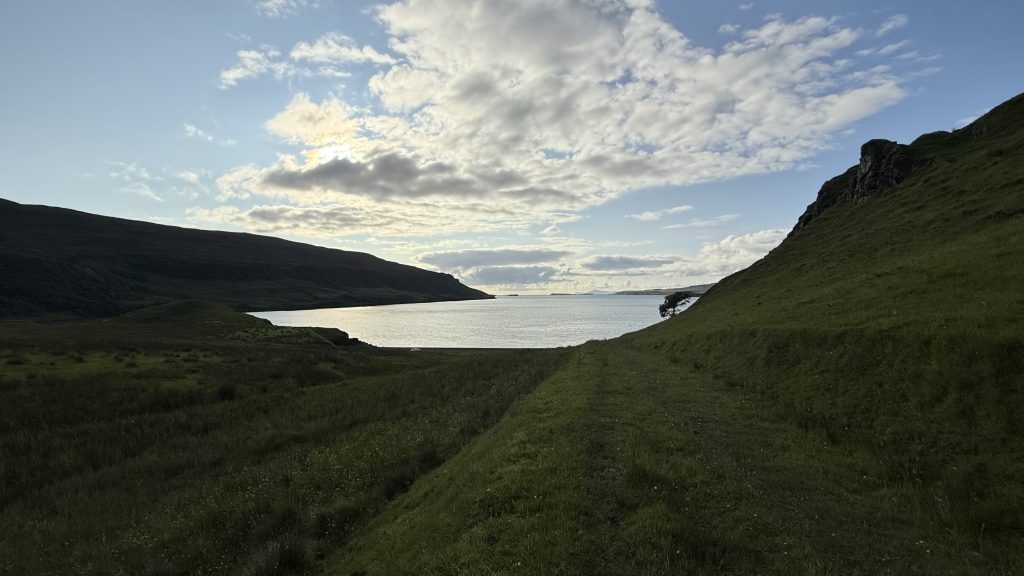
For years, then decades, the Norse presence on Waternish grew. Turf‑roofed houses rose near the shore, their walls built from stone and earth. Boats were pulled onto the beach, their hulls drying in the wind. Sheep grazed the slopes, their wool thick and coarse. The Norse carved runes into stone markers, honoring their gods and marking boundaries. They named the bays and headlands in their own tongue—names that would endure long after their settlements faded.
The coastline bore the imprint of their presence. The shape of a harbor, the curve of a field, the remnants of a dwelling half‑buried in the earth—each one a quiet testament to lives lived on the edge of the world. Yet the Norse were not alone in these islands. The Gaels, descendants of earlier settlers, watched from across the sea and from the southern reaches of Skye. Tensions simmered, alliances formed and dissolved, and the two cultures blended in ways neither could fully control. Over time, the Norse influence softened, absorbed into the rhythms of Gaelic life.
Centuries passed. The Norse settlements thinned, their structures reclaimed by grass and moss. The language shifted. The customs changed. But the place‑names remained, clinging to the coastline like echoes of an older world. The land remembered, even when the people moved on.
From this landscape, shaped by wind and memory, the first great clan of Waternish began to rise.
The MacNeacails Take Root
The moorland near the Fairy Bridge stream grew busier as generations passed. Small clusters of dwellings dotted the slopes, their thatched roofs darkened by weather. Smoke rose from hearths, drifting across the glens. Cattle grazed in the hollows, their low calls carrying on the wind. The Norse influence lingered in the shape of boats pulled onto the shore, but the people who lived here now spoke Gaelic, not Old Norse. Their customs were rooted in the land, shaped by seasons and kinship.
Among these families, one lineage began to gather strength—the MacNeacails, known later as the Nicolsons. They were not a clan in the romanticized sense of later centuries, but a kin‑group bound by blood, loyalty, and shared land. Their authority grew gradually, shaped by marriages, alliances, and the quiet accumulation of influence. They controlled the best grazing lands, oversaw fishing rights, and settled disputes. Their presence was felt across the peninsula, not through force, but through continuity.
Their stronghold stood on a rise overlooking the sea—a simple structure by later standards, but formidable in its time. From this vantage point, the MacNeacail chiefs watched the waters of the Minch, alert to the approach of friend or foe. The coastline was both a lifeline and a vulnerability. Boats brought trade, news, and danger in equal measure.
For centuries, the MacNeacails thrived. Their cattle herds grew. Their influence spread. They forged alliances with neighboring families, strengthening their position. The land responded to their stewardship. Fields were cleared, boundaries marked, and paths worn into the earth by generations of footsteps. The peninsula became a patchwork of small farms, each tied to a family, each family tied to a lineage.
Yet power in the Highlands was never fixed. It shifted like the tide, rising and falling with the fortunes of families. And in the fifteenth century, a new force began to cast its shadow over Waternish—a clan whose ambitions stretched far beyond the boundaries of their ancestral lands.
The MacLeods Ascend
Across the waters of Loch Dunvegan, a new center of power was taking shape. Dunvegan Castle, perched on its rocky promontory, grew in size and significance. Its walls thickened, its halls expanded, its influence radiating outward across Skye. The MacLeods, already a formidable clan, were rising with a momentum that would reshape the island.
Their ambitions were broad. Their alliances were strategic. Their reach extended into territories once held by smaller kin‑groups. Waternish, with its fertile grazing lands and strategic coastline, lay directly in their path.
The transition of power from the MacNeacails to the MacLeods was not sudden. It unfolded over generations, a gradual erosion rather than a decisive conquest. Marriages linked the families. Land disputes tilted in favor of the MacLeods. Skirmishes flared along the borders, each one shifting the balance slightly. The MacNeacails, once dominant on Waternish, found their authority overshadowed.
By the sixteenth century, the MacLeods had become the primary force on the peninsula. The MacNeacails did not vanish—they remained as tacksmen, tenants, and respected families—but their era of leadership had passed. The land now answered to Dunvegan.
The Fairy Bridge, spanning the small stream near the heart of the peninsula, became a symbolic threshold between the old order and the new. The legend of the fairy bride, woven from threads of romance and sorrow, took root in this era. Whether born from truth or imagination, the story became part of the identity of the MacLeods, a reminder that their history was shaped not only by power, but by myth.
Waternish entered a new chapter—one marked by both prosperity and peril.
The Clan Era: Strength and Strain
The peninsula in the sixteenth and seventeenth centuries was a landscape of contrasts. Crofts dotted the slopes, their walls built from stone gathered from the fields. Cattle moved across the moorland in slow, deliberate herds. The coastline bustled with activity during the fishing seasons, boats pulled onto the shore, nets drying in the wind. Life was hard, but it was steady, shaped by the rhythms of land and sea.
The MacLeods ruled Waternish as part of their broader domain, using the peninsula as a strategic outpost against their rivals, particularly the MacDonalds of Uist. Feuds flared, raids scarred the coastline, and alliances shifted with the seasons. The people of Waternish lived with the constant awareness that conflict could arrive by sea or land without warning.
Yet daily life continued. Children were born. Crops were planted. Cattle were driven across the moors. The land demanded resilience, and the people answered with quiet persistence. Their homes were built low against the wind, their fields carved from stubborn soil, their lives anchored in community.
The seventeenth century brought new challenges. Famine struck. Disease spread. The political landscape of Scotland shifted as the old clan loyalties were tested by national upheavals. The people of Waternish endured each storm, adapting as best they could.
By the eighteenth century, the clan system itself began to weaken. The Jacobite uprisings shook the Highlands, fracturing loyalties and drawing the clans into conflicts that would reshape their future. The world was changing, and Waternish would soon feel the full weight of that transformation.

The Enlightenment Reaches Loch Bay
The late eighteenth century brought a new kind of ambition to Waternish—one born not from clan rivalry, but from the ideals of the Scottish Enlightenment. In 1790, the British Fisheries Society purchased land at Loch Bay with a bold vision. They sought to modernize the Highlands, replacing the old clan‑based economy with a thriving maritime industry.
Stein, the village they planned, was laid out with precision. Streets were mapped. Terraces were designed. Thomas Telford, one of Scotland’s most renowned engineers, shaped the blueprint. The Society imagined a bustling port filled with fishermen harvesting the “silver darlings”—herring that could bring wealth to the region.
But the plan faltered almost from the start.
Salt taxes made curing fish expensive. The herring migrations proved unpredictable. The people of Waternish, rooted in crofting and cattle, were not easily persuaded to abandon their way of life. The village grew slowly, its promise dimmed by economic realities.
By the 1830s, the Fisheries Society was ready to withdraw. The Enlightenment had brought ambition, but it could not overcome the stubborn truths of the land, the sea, or the culture of the people who lived here.
And into this vacuum, the MacLeods returned.
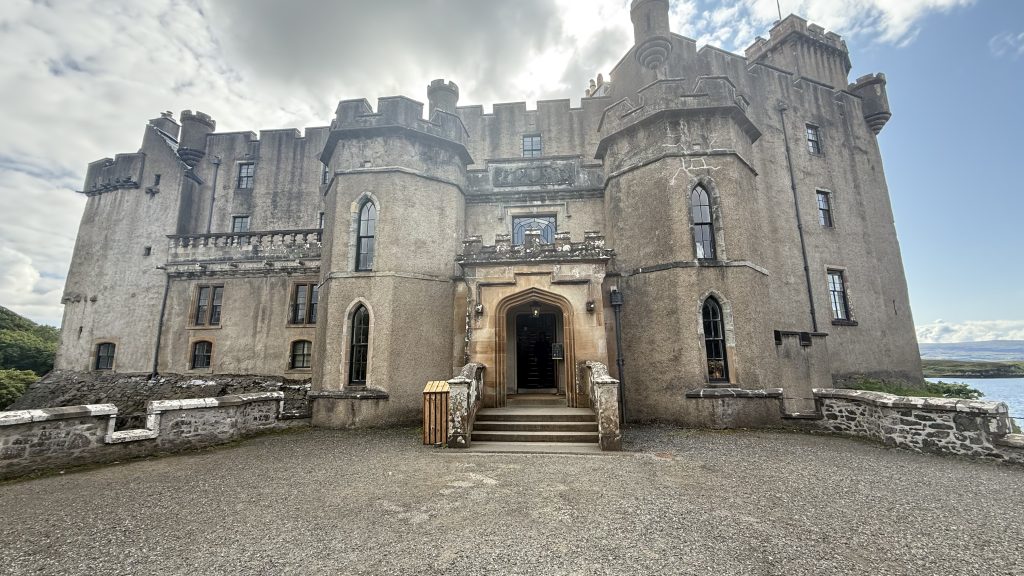
The return of the MacLeods to Loch Bay in the early nineteenth century marked a turning point, though not in the way their ancestors might have imagined. The world had changed. The clan chiefs were no longer feudal guardians commanding loyalty through kinship and tradition. They had become landlords navigating a shifting economic landscape, burdened by debt and pressured by new agricultural models that valued profit over people.
The land they repurchased was not the thriving maritime hub the Fisheries Society had envisioned. Stein’s terraces stood half‑realized, its streets quiet, its harbor underused. The grand experiment of Enlightenment planning had left behind a village caught between ambition and reality. The MacLeods inherited not only the land, but the weight of its unrealized promise.
Across Waternish, the crofting communities continued their steady rhythms. Fields were tilled. Cattle grazed. Families tended the same plots their ancestors had worked for generations. The land was not generous, but it was familiar. It offered continuity, a sense of belonging rooted in centuries of shared history.
But the pressures of the nineteenth century were relentless. Wool prices rose. Sheep farming promised higher returns than tenant rents. Estate managers, driven by economic logic and distant expectations, began to view the land through a different lens. People became obstacles to profit. Communities became inefficiencies. The moorland, once shaped by the footsteps of generations, was reimagined as pasture for vast flocks.
The Clearances arrived on Waternish not as a single event, but as a slow tightening of circumstance. Notices were served. Families were told their leases would not be renewed. Homes were marked for demolition. Some left willingly, hoping for better prospects across the sea. Others resisted, clinging to the land that held the bones of their ancestors.
Evictions unfolded in waves. Blackhouses were dismantled stone by stone. Roof timbers were burned to prevent return. Smoke drifted across the glens, carrying with it the scent of peat and loss. The moors that had once echoed with the sounds of cattle and children grew quiet. Paths worn by generations faded into the heather.
Those who remained were pushed toward the coast, into cramped crofts in Geary and Hallin. The soil there was thin, the land steep, the sea unpredictable. Fishing offered opportunity, but also danger. The people adapted, as they always had, but the weight of displacement lingered. The landscape bore the scars of absence—ruins scattered across the hillsides, each one a silent testament to lives uprooted.
The population of Waternish dwindled. Ships carried families to Canada, Australia, and the crowded industrial cities of the Lowlands. Names that had been tied to the peninsula for centuries vanished from its records. The land grew quiet, its stories carried only by the wind.
Yet even in this era of upheaval, resilience endured. The crofters who remained carved out a life from the margins. They tended small plots, fished the coastal waters, and gathered seaweed to fertilize their fields. Their homes were modest, their resources limited, but their connection to the land remained unbroken.
The late nineteenth century brought change. The Crofters’ Act of 1886 granted security of tenure, fair rents, and the right to pass land to descendants. For the first time in generations, the people of Waternish held a measure of control over their own future. The balance of power shifted. The estate’s grip loosened. The land began to answer once more to those who lived upon it.
The twentieth century unfolded with its own challenges and transformations. Wars drew men from the peninsula, some never to return. Economic shifts reshaped rural life. Roads improved, connecting Waternish more closely to the rest of Skye. Electricity reached the crofts. New houses rose alongside the old blackhouse ruins, their white walls bright against the moorland.
The landscape changed, but its essence remained. The moors still stretched wide and open. The cliffs still rose in dark, weathered lines. The sea still shaped the rhythm of life, its tides marking the passage of days and seasons. The people adapted, as they always had, weaving modern life into the ancient fabric of the land.
In the late twentieth and early twenty‑first centuries, Waternish experienced a quiet revival. Community‑led housing projects took root in Stein, offering new opportunities for families to remain on the peninsula. Crofting communities strengthened their collective voice, managing shared grazing lands and preserving traditional practices. Small businesses emerged—craft workshops, studios, and local enterprises that drew visitors while honoring the character of the place.
The land, once emptied by force, began to fill again—not with crowds, but with a renewed sense of purpose. The ruins of old blackhouses stood alongside thriving crofts, reminders of both loss and endurance. The coastline, shaped by centuries of human presence, carried the imprint of every era: Norse settlers, Gaelic kin‑groups, clan chiefs, crofters, and modern residents who continued to shape the story of Waternish.
The single‑track road leading from the Fairy Bridge to Loch Bay became a thread connecting past and present. It wound through moorland and glens, past the remnants of old settlements and the homes of those who had returned or remained. The road carried the weight of history, each bend revealing a new perspective on the land’s long memory.
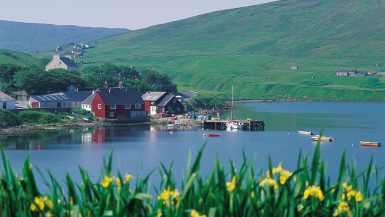
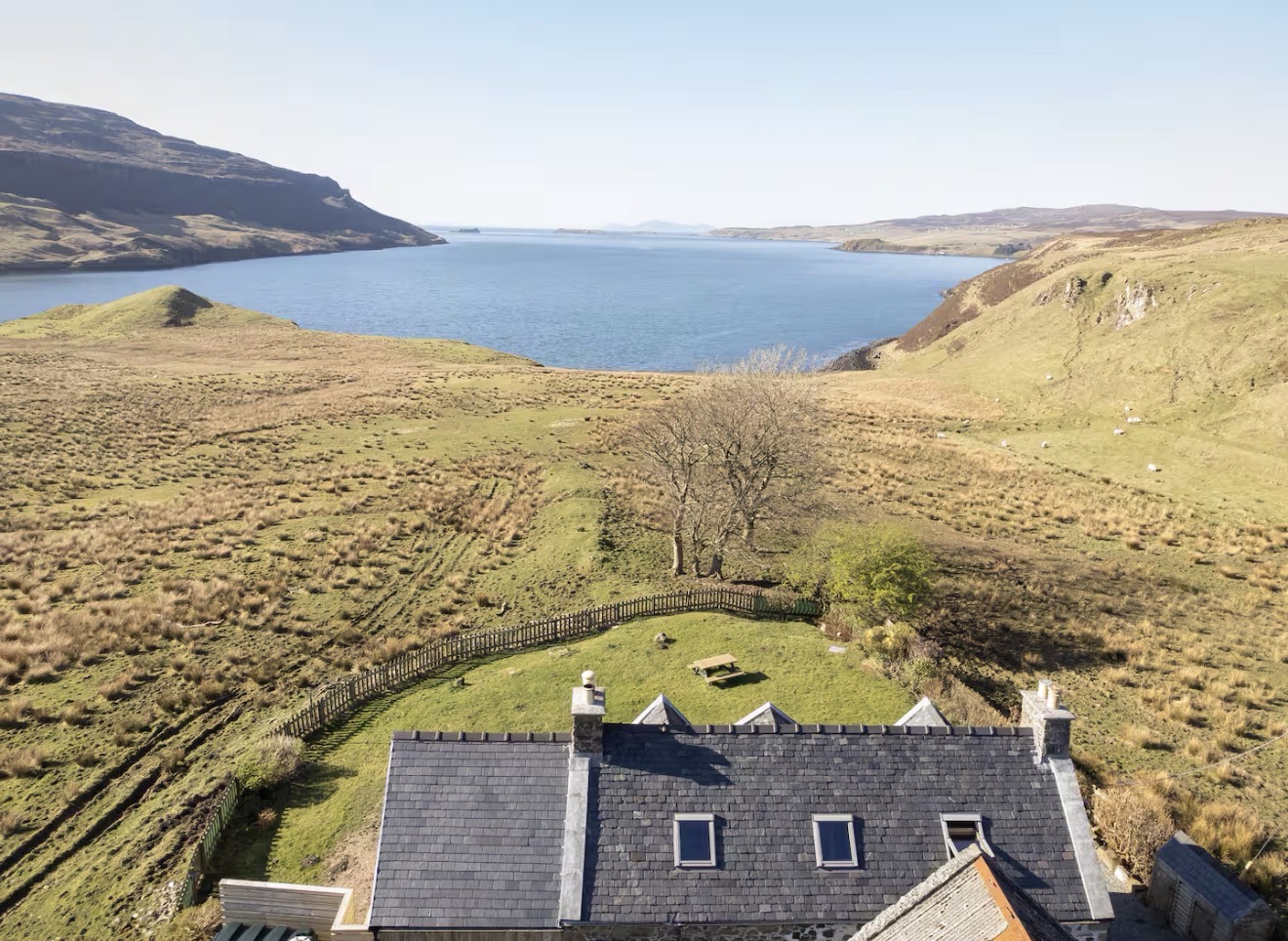
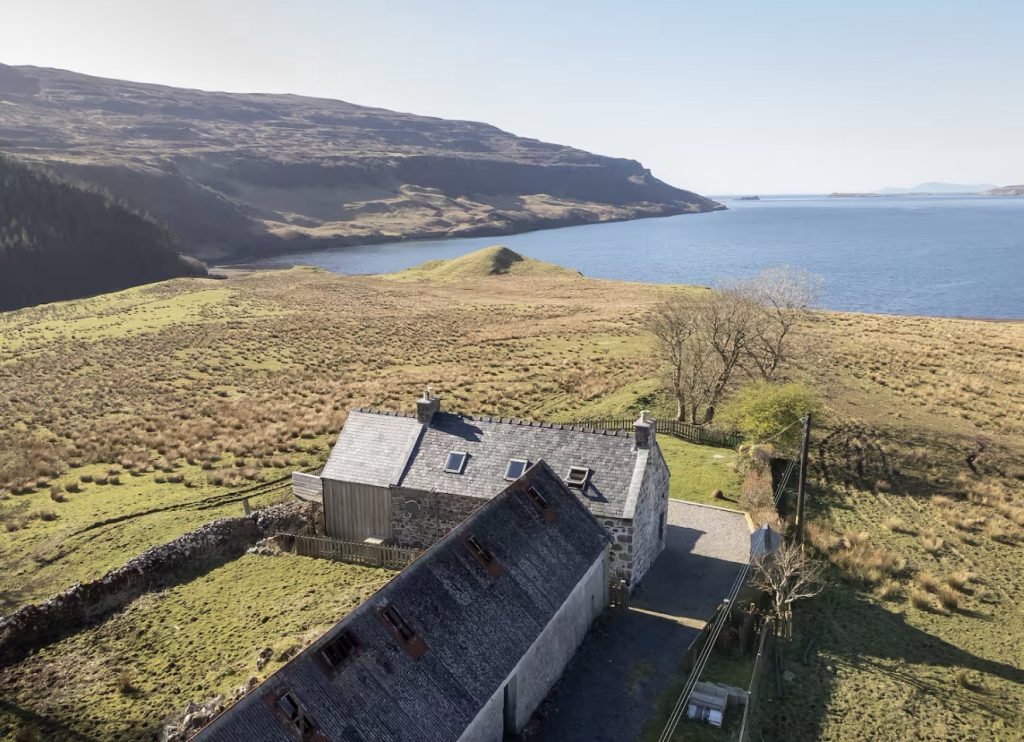
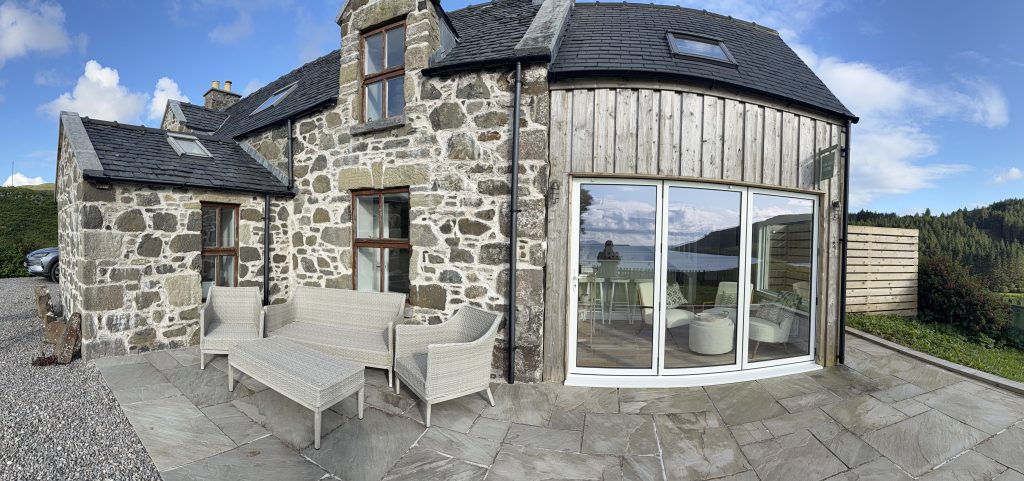
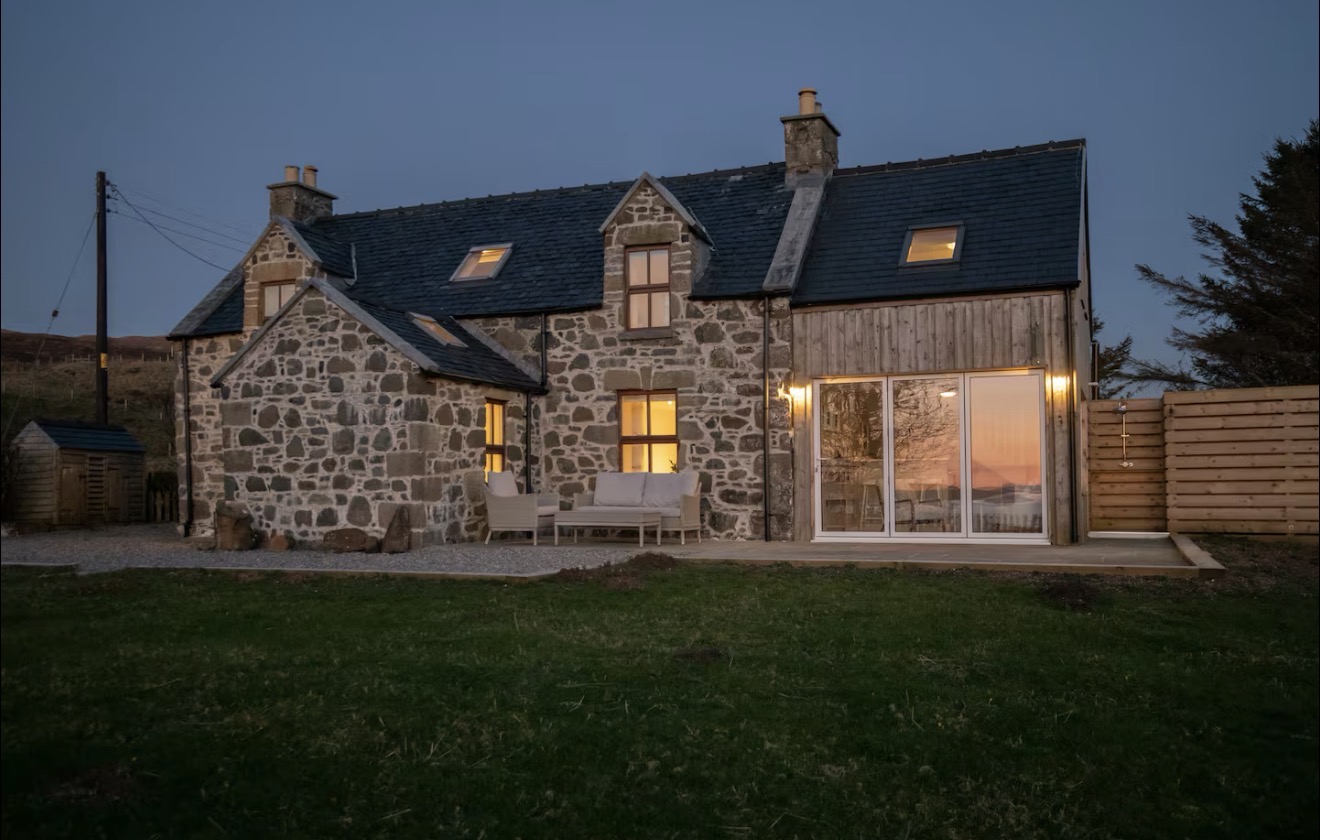
Near the end of the road, a small croft overlooked the curve of Loch Bay. Its walls were built from stone gathered from the surrounding fields, its roof darkened by weather. From its windows, the view stretched across the water to the distant outline of the Outer Hebrides. The light shifted across the bay throughout the day, casting the landscape in shades of gold, silver, and deep blue.
In the early morning, mist drifted across the water, softening the edges of the hills. The moorland glowed with muted colors—greens, browns, and purples blending into a quiet tapestry. Birds moved through the air in slow arcs, their calls echoing across the glens. The land felt ancient, shaped by forces older than memory.
By midday, the light sharpened. The cliffs stood in stark relief, their surfaces etched by centuries of wind and rain. The sea shimmered, its surface broken by the movement of tides and distant boats. The crofting fields, marked by stone walls and wire fences, stretched across the slopes in irregular patterns, each one a testament to human persistence.
In the evening, the sun dipped toward the horizon, casting long shadows across the moor. The colors deepened, the landscape taking on a quiet intensity. The air cooled, carrying the scent of peat and salt. The bay reflected the fading light, its surface turning to glass.
From this vantage point, the entire story of Waternish seemed to unfold at once. The Norse longship approaching the coastline. The rise of the MacNeacails. The ascendancy of the MacLeods. The ambitions of the Enlightenment. The sorrow of the Clearances. The resilience of the crofters. The quiet revival of modern times.
Each era left its mark, shaping the land and the people who called it home. The peninsula held these layers of history not as separate chapters, but as a continuous thread woven through time. The wind carried echoes of the past across the moorland. The sea whispered stories along the shore. The land remembered.
As the last light faded over Loch Bay, the landscape settled into stillness. The contours of the hills softened. The water darkened. The moorland stretched into shadow. The peninsula stood quiet, shaped by centuries of change yet enduring in its essence.
Waternish remained a place where history lived not in monuments or grand structures, but in the land itself—in the curve of a bay, the line of a stone wall, the ruins of a blackhouse, the path worn through heather by generations of footsteps. A place where the past was never far beneath the surface. A place shaped by wind and memory. A place that endured.
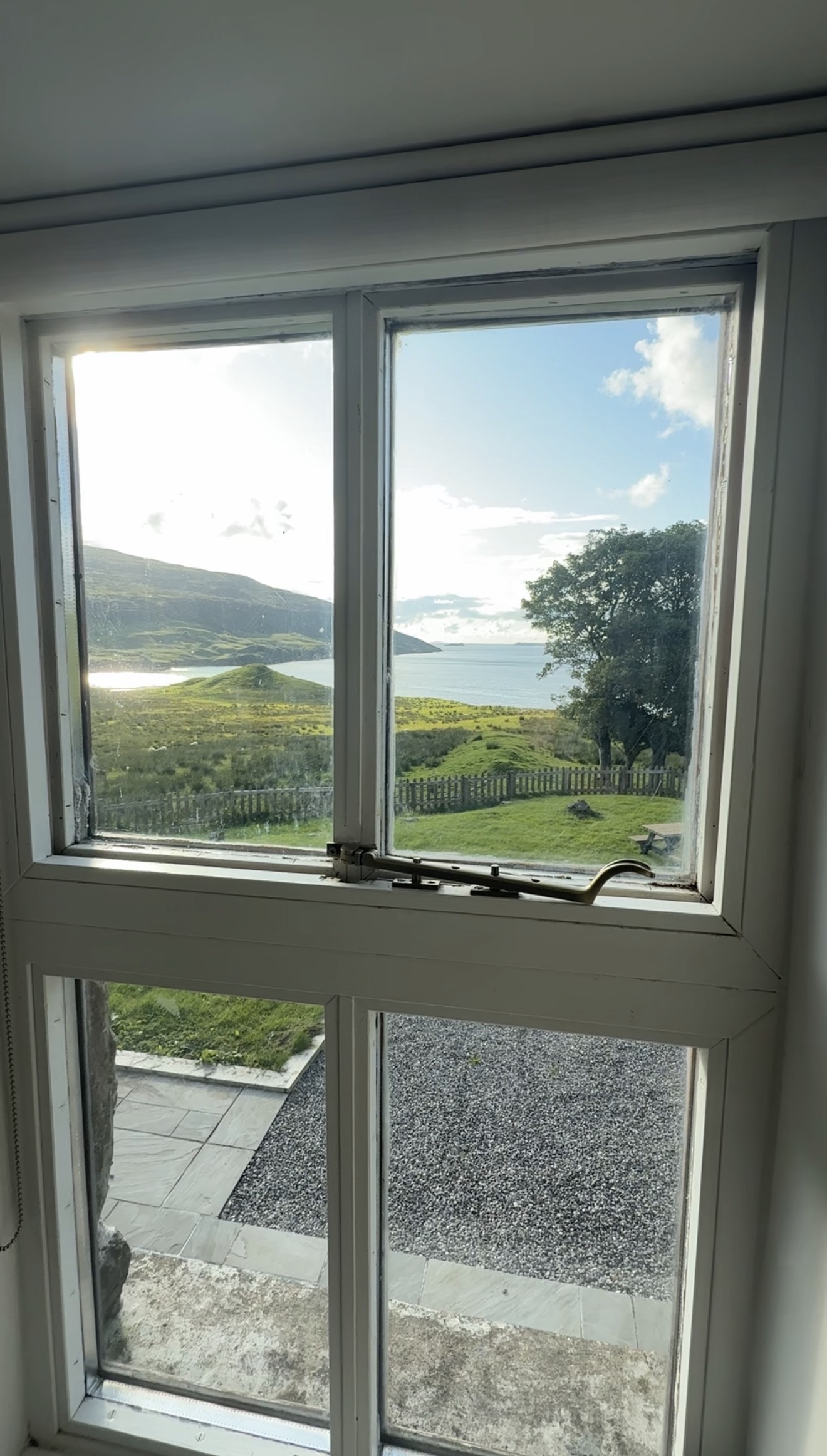
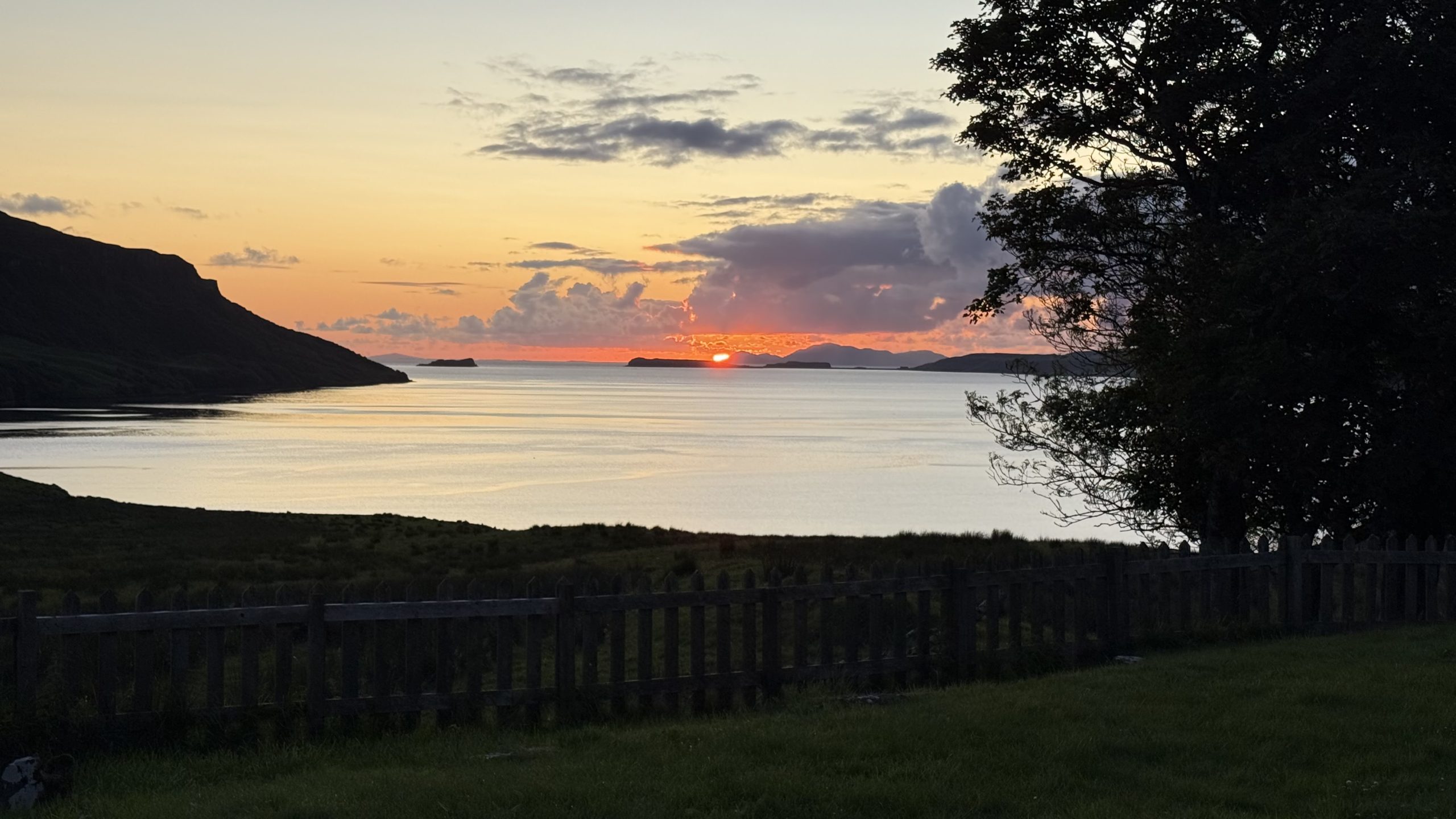
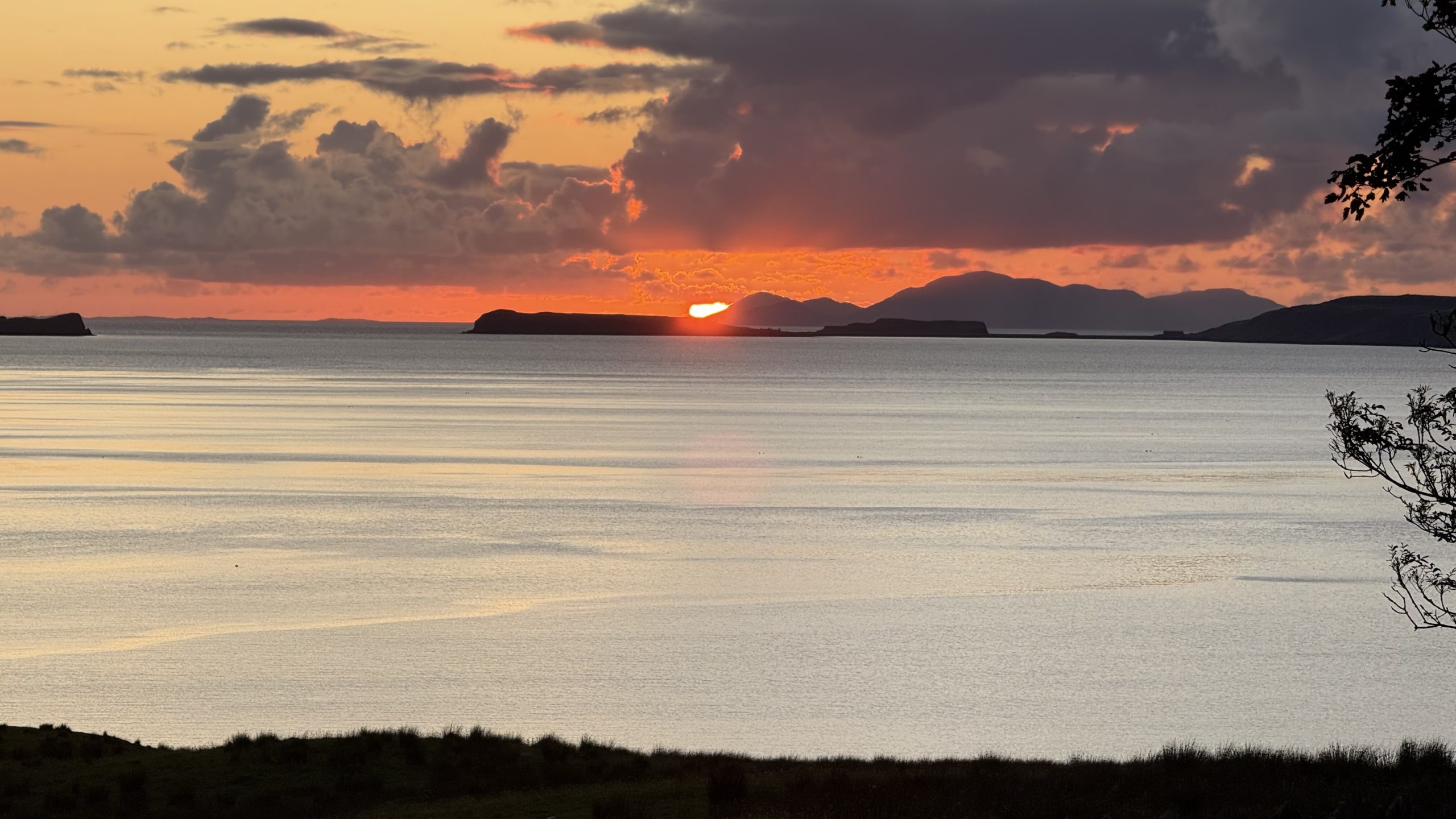
When I stand at the window of the croft and look out over Loch Bay, the weight of the land settles around me like a quiet truth. The water shifts with the wind, carrying the memory of every life that has passed along these shores. The moor stretches outward in muted colors, shaped by centuries of footsteps and storms. The ruins scattered across the hillsides feel close, as if the past breathes just beneath the surface of the earth. This place holds the imprint of longships, clans, clearances, and quiet resilience, and in its stillness I feel both the depth of what has been lost and the strength of what endures. The bay reflects the changing light, and in those shifting colors I find the stories of this land woven into my own. This is my home, and these are the thoughts that rise within me as I watch the tide move in and out, carrying the echoes of Waternish across the water.