
When I look across the long arc of British history, I’m struck by how rarely the monarchy has been forced to confront real accountability. For centuries, the Crown has existed in a space above ordinary consequences — insulated by tradition, ceremony, and the sheer weight of its own symbolism. And yet, there are moments, rare and unsettling, when that insulation fails.
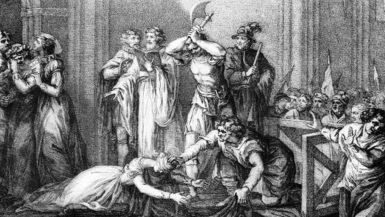
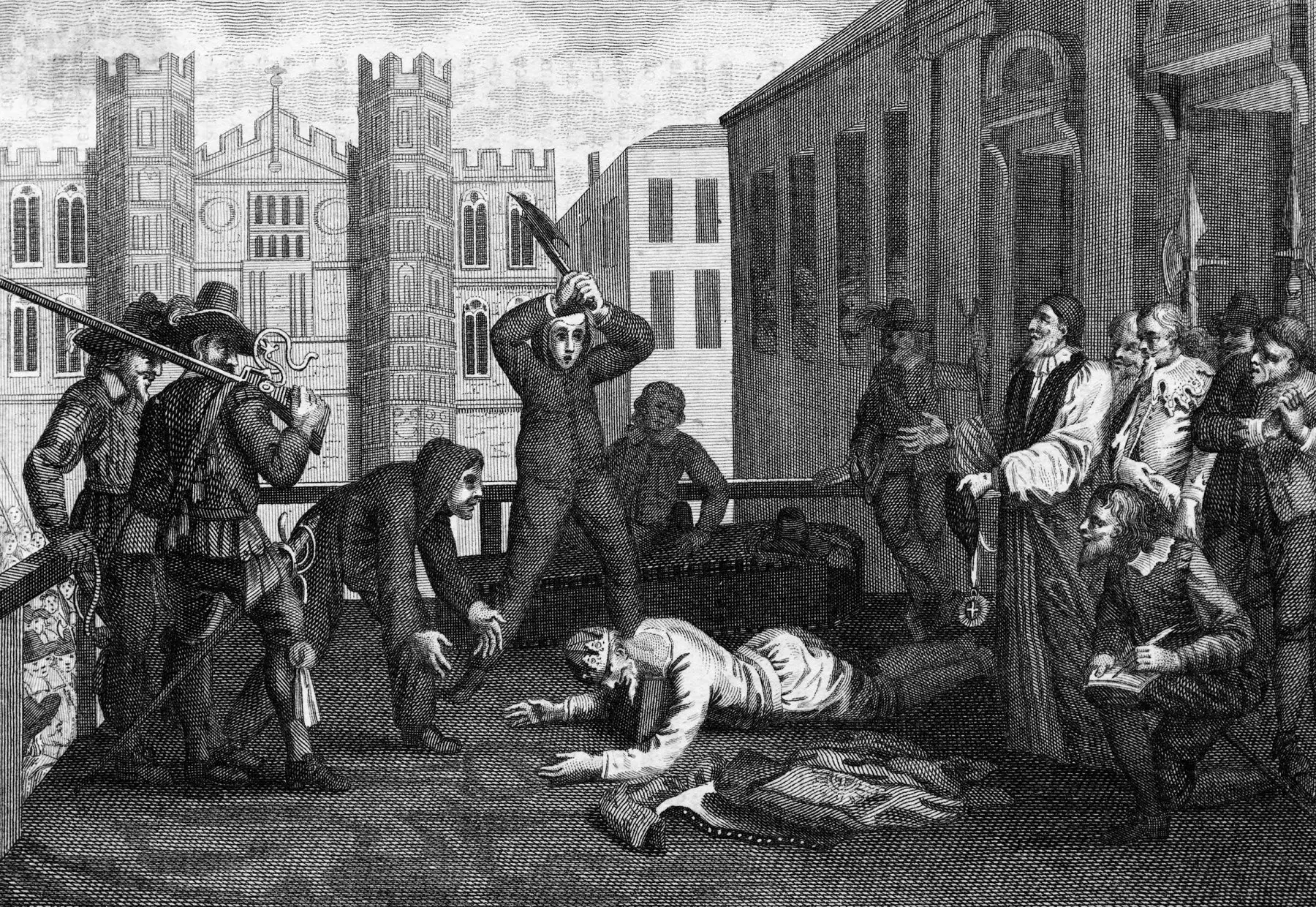
The most dramatic example is still the arrest and execution of King Charles I in 1649 — the only time a reigning British monarch has been seized, tried, and put to death by his own subjects. It’s a moment so extraordinary that it almost feels mythic, a rupture in the natural order of monarchy.
Centuries later, we watch another royal crisis unfold — not with swords or scaffolds, but with headlines, lawsuits, and a disastrous television interview. Prince Andrew, the Duke of York, was never arrested, never charged, and never tried in a criminal court. But as more information emerged about his association with Jeffrey Epstein, he has became ensnared in a different kind of reckoning: a public, reputational, and institutional collapse that effectively has ended his royal life. (As it should!)
These two events are not equivalent. But they do speak to the same underlying question: What happens when a royal crosses a line the public can no longer ignore?
The Last Time a British Monarch Was Truly Held to Account
When I look across the long sweep of British history, I’m struck by how rarely the monarchy has been forced to confront genuine accountability. For centuries, the Crown has existed in a space above ordinary consequences — protected by tradition, ceremony, and the sheer weight of its own symbolism. Yet every so often, something breaks through that protective shell. Sometimes it’s a political earthquake. Sometimes it’s a public reckoning. And sometimes, as we’re seeing now, it’s a slow, relentless erosion of trust and train wreak of the royals own making.
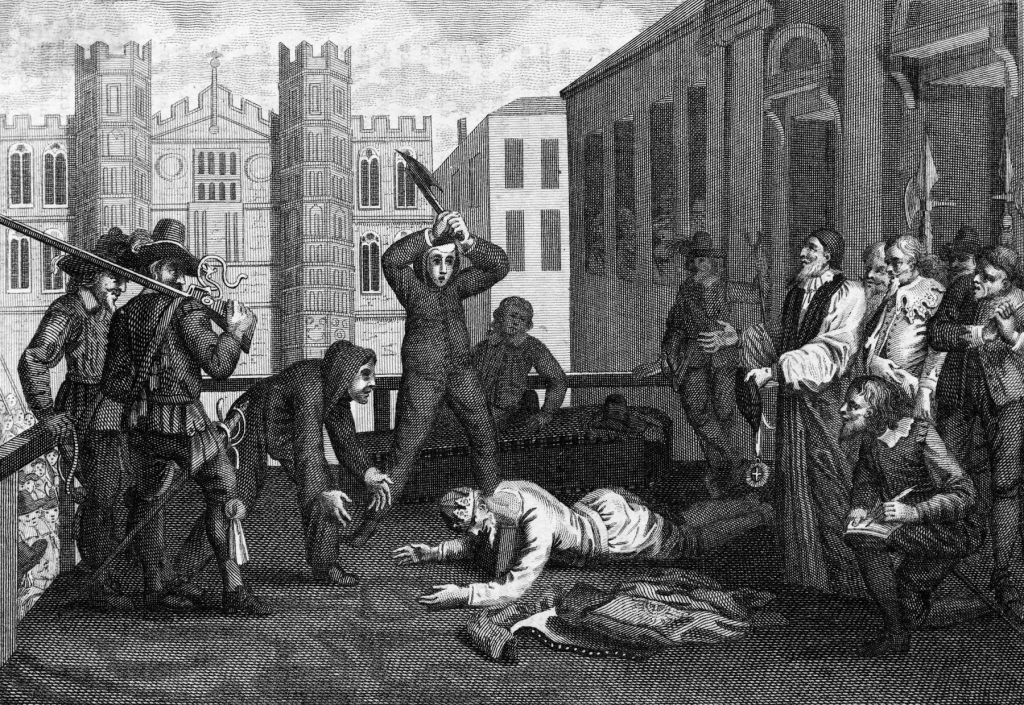
The most dramatic example sits deep in the historical record: the arrest and execution of King Charles I in 1649. It remains the only moment when a reigning British monarch was seized, tried, and put to death by his own subjects. It’s a moment so extraordinary that it still feels almost unreal — a rupture in the natural order of monarchy.
And then, centuries later, I find myself watching another royal crisis unfold in real time. Prince Andrew, the Duke of York, has never been arrested, never been charged with a crime, and never stood trial in a criminal court. But as more information emerges about his association with Jeffrey Epstein, the public reaction has grown sharper, louder, and more unforgiving. His downfall isn’t legal; it’s reputational. It’s institutional. And it’s happening right in front of us.
These two events are worlds apart. But they both raise the same question: What happens when a royal crosses a line the public can no longer ignore?
A Historical Moment When a King Faced the Law
Looking back at the 17th century, England was a nation in turmoil. King Charles I believed deeply in the divine right of kings — the idea that his authority came directly from God and was not subject to earthly challenge. Parliament, increasingly assertive, believed the king should govern with the consent of the people’s representatives. That ideological clash eventually erupted into the English Civil War.
When Charles lost the war, he didn’t just lose political power. He lost the very foundation of his authority.
He was taken into custody in 1647. At first, he was treated with a degree of respect befitting a monarch. But Charles undermined himself. Even in captivity, he negotiated behind the scenes, encouraged uprisings, and helped trigger the Second Civil War. These actions convinced the Parliamentarian leadership that Charles was not simply a defeated king — he was a continuing threat to national stability.
The trial that followed was unprecedented. A monarch had never been put on trial by his own subjects. Charles refused to recognize the court’s authority, but the court pressed on. He was found guilty of treason and executed in 1649.
It was the ultimate act of accountability — shocking, transformative, and historically singular. The monarchy was abolished. England became a republic. And the idea that even a king could be judged by his people became part of the national memory.
A Modern Royal Crisis Playing Out Before Our Eyes

Watching the Prince Andrew scandal unfold feels nothing like reading about Charles I. It’s not dramatic in the traditional sense. There are no armies, no trials, no scaffolds. Instead, it’s a slow, grinding collapse — one headline at a time, one interview at a time, one revelation at a time.
And what stands out to me is how the story keeps evolving. It doesn’t fade. It doesn’t settle. It keeps resurfacing as more reporting, more testimony, and more documentation emerge about Jeffrey Epstein’s world and the people who moved within it.
I want to be absolutely clear: Prince Andrew has never been arrested, charged with a crime, or tried in a criminal court.
But the public isn’t reacting to criminal charges. The public is reacting to judgment, proximity, and choices — choices that, as more information comes out, look increasingly indefensible and implicating.
Every new detail adds weight. Every resurfaced photograph adds context. Every interview adds tension and contradicts previous interviews.
None of it amounts to criminal evidence against Andrew. But the cumulative effect is unmistakable. He isn’t legally implicated — he’s contextually implicated. And context is powerful.
The civil lawsuit filed by Virginia Giuffre intensified the scrutiny. Andrew denied the allegations, and the case ended in a confidential settlement. But the lawsuit ensured the story stayed alive, and every new headline made his position more precarious.
Then came the BBC Newsnight interview — the moment everything crystallized for me. Watching it felt surreal. His explanations didn’t land. His tone felt detached. His reasoning felt out of step with the seriousness of the situation. The interview didn’t introduce new facts, but it revealed something just as important: how Andrew understood — or failed to understand — the gravity of what he was facing.
Within days, he stepped back from public duties. Soon after, he lost his military titles and patronages. The monarchy, acutely aware of its dependence on public trust, moved quickly to distance itself.
And this is where the modern parallel becomes clear. Andrew’s downfall didn’t involve police or courts. Instead, he experienced something uniquely contemporary: a symbolic arrest. He was arrested by public opinion. He was tried in the global media. And he was sentenced by the institution that once shielded him.
He wasn’t marched to a courtroom like Charles I. But he was removed from public life. He was stripped of roles that once defined him. He became, in effect, a royal in name only.
And in today’s monarchy, that is its own kind of downfall.
Two Crises, Two Eras, One Thread of Accountability
Charles I faced the full force of the state. Prince Andrew is facing the full force of public opinion.
One was judged in a courtroom. The other is being judged in the public square.
Both forms of accountability reflect the values of their time.
In 1649, public opinion had limited reach. Today, it is global, instantaneous, and relentless.
Andrew’s downfall isn’t driven by Parliament or the courts. It’s driven by:
- Media scrutiny
- Public expectations
- Social pressure
- The monarchy’s need to preserve its legitimacy
In that sense, Andrew’s crisis is a modern echo of Charles’s — not in severity, but in symbolism.
Charles believed he was above the law. Andrew is learning he is not above public scrutiny.
The monarchy of 1649 wielded political power. The monarchy of today wields symbolic power.
And symbolic power depends entirely on public trust.
Why Moments Like These Are So Rare
The monarchy is structured to shield its members from legal entanglements. Advisors, courtiers, and legal teams intervene long before a situation escalates. This makes Charles I’s arrest — and even Andrew’s public disgrace — exceptionally rare.
The monarchy is not just a family; it is a symbol of continuity. Any legal action against a royal risks destabilizing that symbol. This is why the institution often resolves crises quietly, through internal measures rather than public confrontation.
In the modern era, the monarchy’s survival depends on its moral authority. When a royal threatens that authority, the institution acts swiftly — not through courts, but through public distancing.
This is why Andrew’s titles were removed. This is why he disappeared from public life. This is why his crisis matters.
The Lesson I Take From Both Moments
The arrest of King Charles I remains one of the most extraordinary events in British history — a moment when the monarchy was not only challenged but dismantled. Prince Andrew’s crisis, though far less dramatic, is significant in its own way. It shows that even in a constitutional monarchy, where royals are insulated from legal jeopardy, they are not insulated from public judgment.
Charles I was held accountable by the state. Prince Andrew is being held accountable by society.
Both moments reveal a simple truth: The monarchy endures not because it is untouchable, but because it adapts to the demands of the time.
In 1649, those demands were revolutionary. In 2026, they are moral, social, and reputational.
And in both eras, the Crown will need to learn the same lesson: No royal is entirely beyond the reach of accountability — whether through law or through the people they serve.