
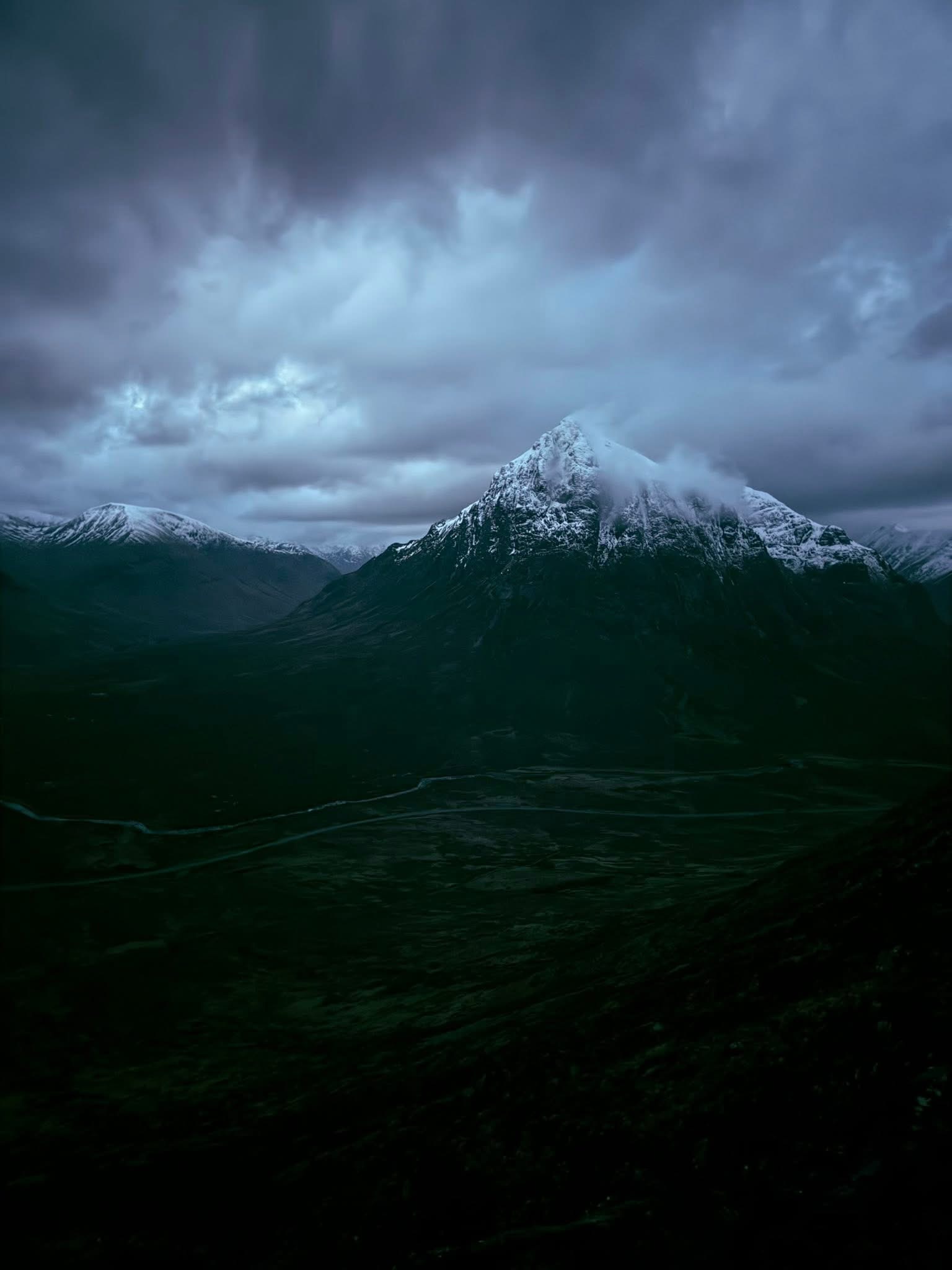
We slipped out of Kings House before first light, breath fogging in our headtorch beams while the glen held its breath. The river murmured behind the hotel and the pyramid of the Buachaille was just a darker shape against a thin scatter of stars. Our plan was simple: move quietly along the West Highland Way, climb the Devil’s Staircase by sunrise, then step off the pass for a short, wintry detour to Stob Mhic Mhartuin. January would do the judging.
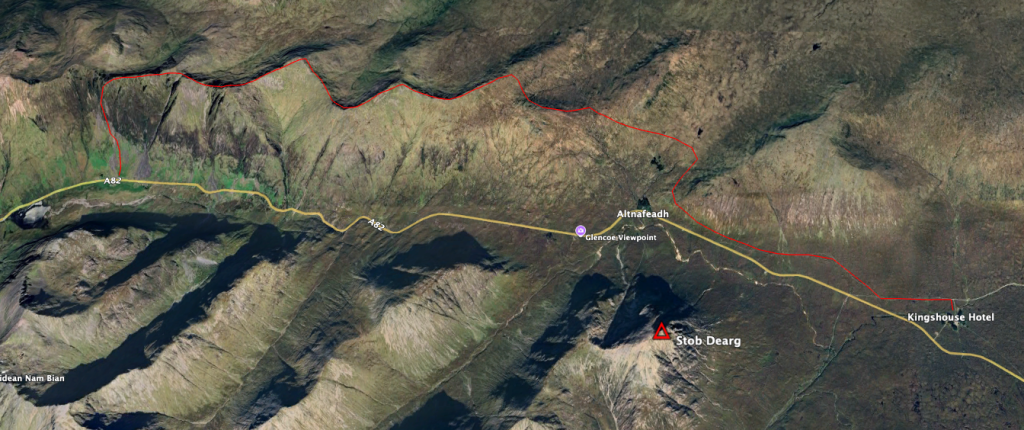
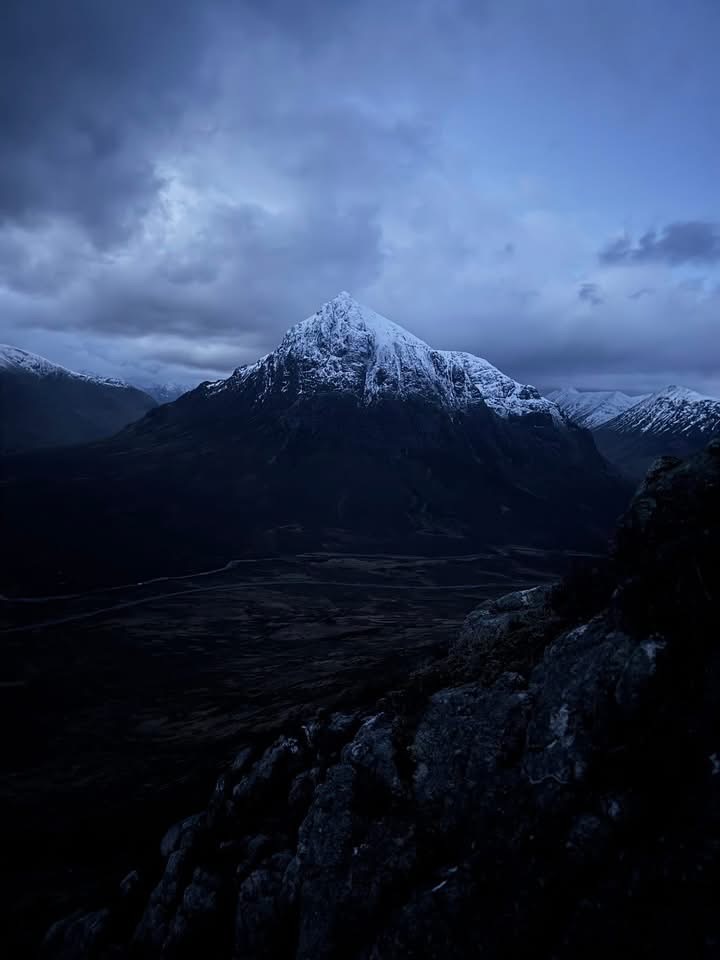
Behind the hotel we crossed the stone bridge and followed the old military road as it eased toward the head of Glen Coe. Even in darkness, the landscape announced itself—big sky, long horizons, the quiet presence of mountains. The path rose and fell gently, frost squeezing a dull sparkle from puddles, and every now and then the low hiss of the A82 drifted up the glen like surf.
The first hour was about rhythm and restraint: warm enough to keep the chill off, cool enough to keep the sweat at bay. There are no facilities after you leave the hotel, so we sipped from flasks and listened to our footsteps. Far ahead, the Buachaille’s ridges gathered detail; the day, still hiding, felt close.
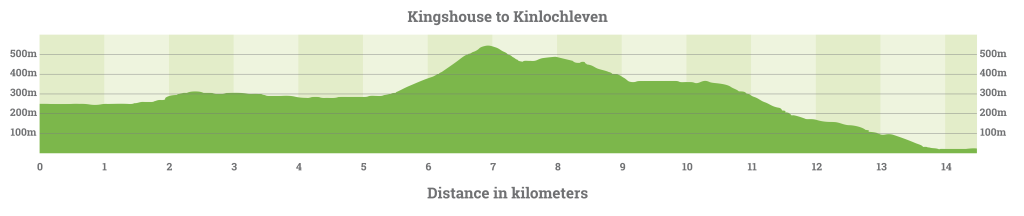
At Altnafeadh the trail tipped decisively uphill, the Devil’s Staircase zig‑zagging into the dark. In summer the switchbacks soften the gradient; in January each corner can be a little riddle—thin ice over stone, wind‑packed snow, a skiff of powder. We shortened poles, planted feet carefully, and took the climb in small bites. As the hillside opened, the wind found us and stitched itself into our layers. The cairns on the bealach—the highest point of the West Highland Way—came out of the grey like two blunt exclamation marks.
Here the moor feels wide and simple, until it isn’t. The path trends north and a short burn crossing can be nothing at all or suddenly fiddly if its stepping stones are glazed. Beyond that, the high ground undulates toward Kinlochleven and a stark slash of water appears off to the right—the long, dark line of the Blackwater Reservoir.
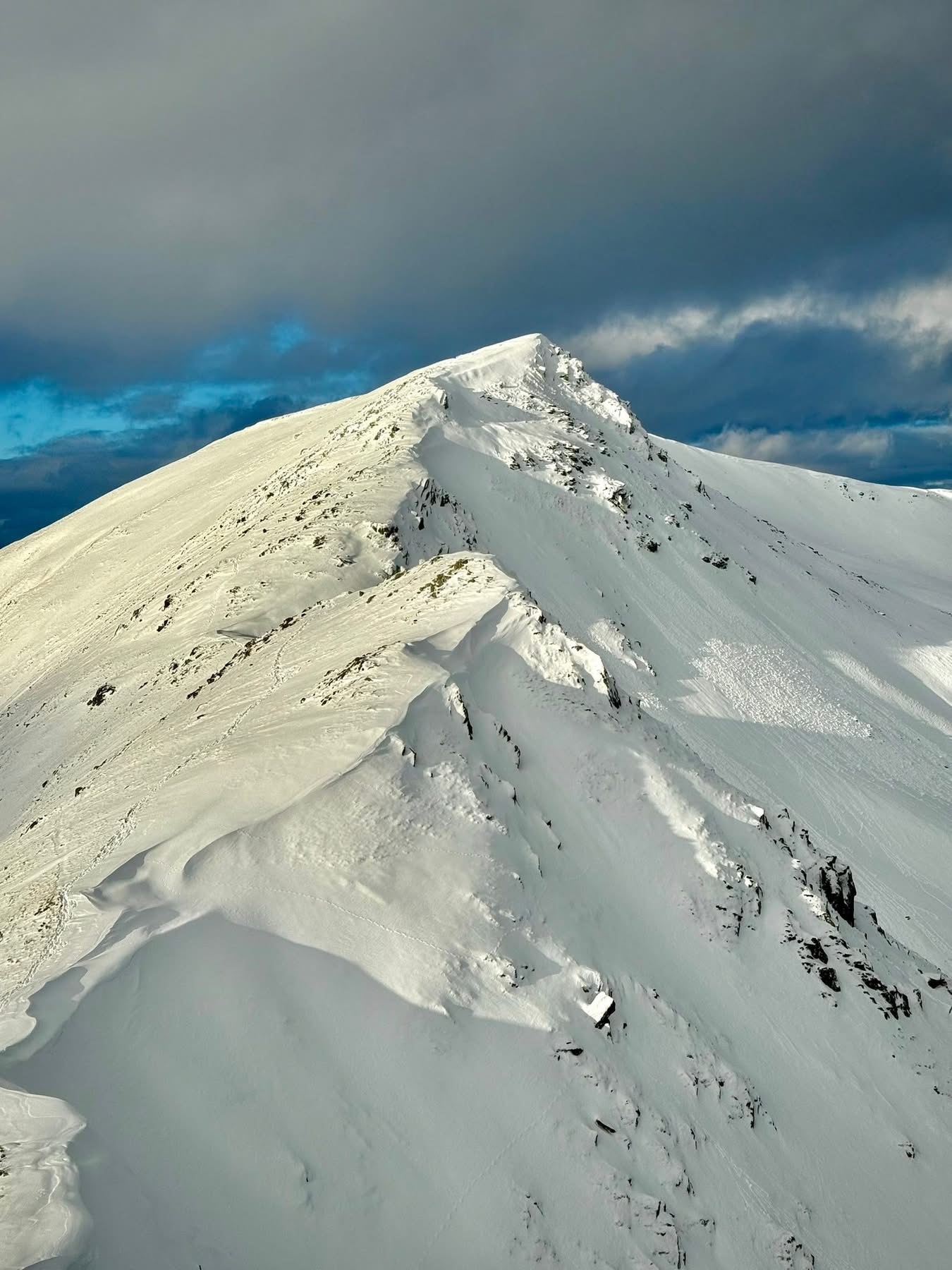
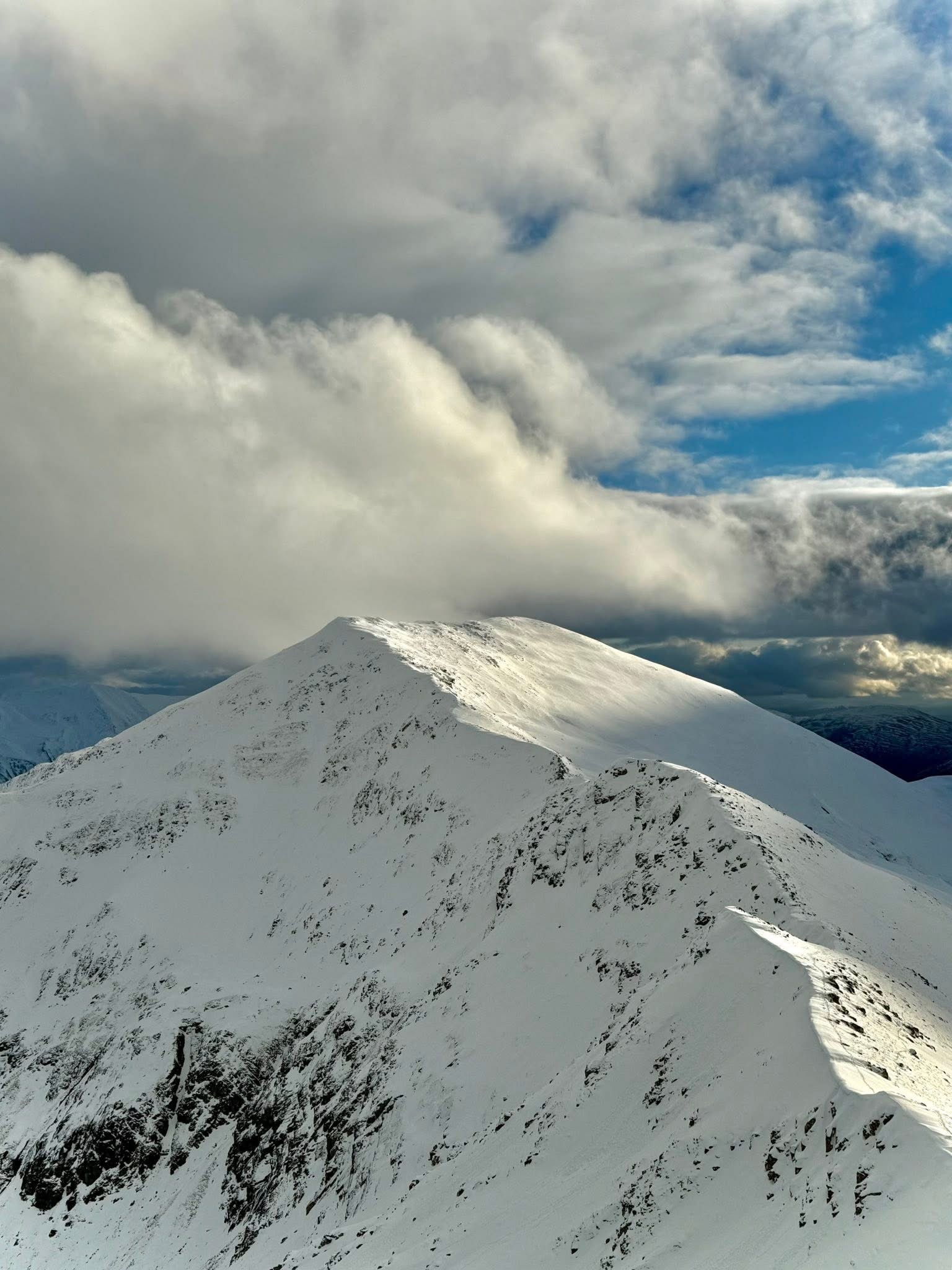
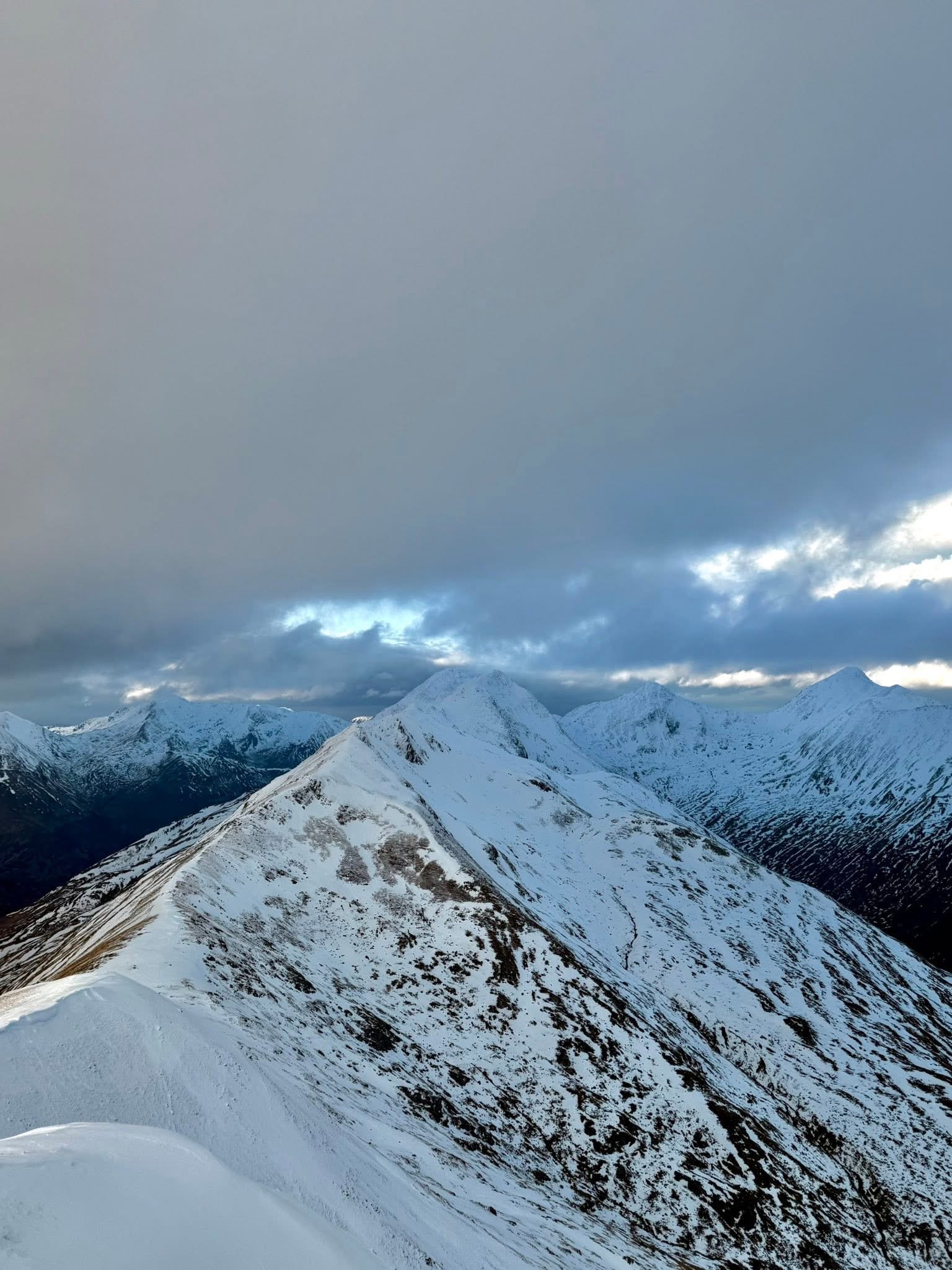
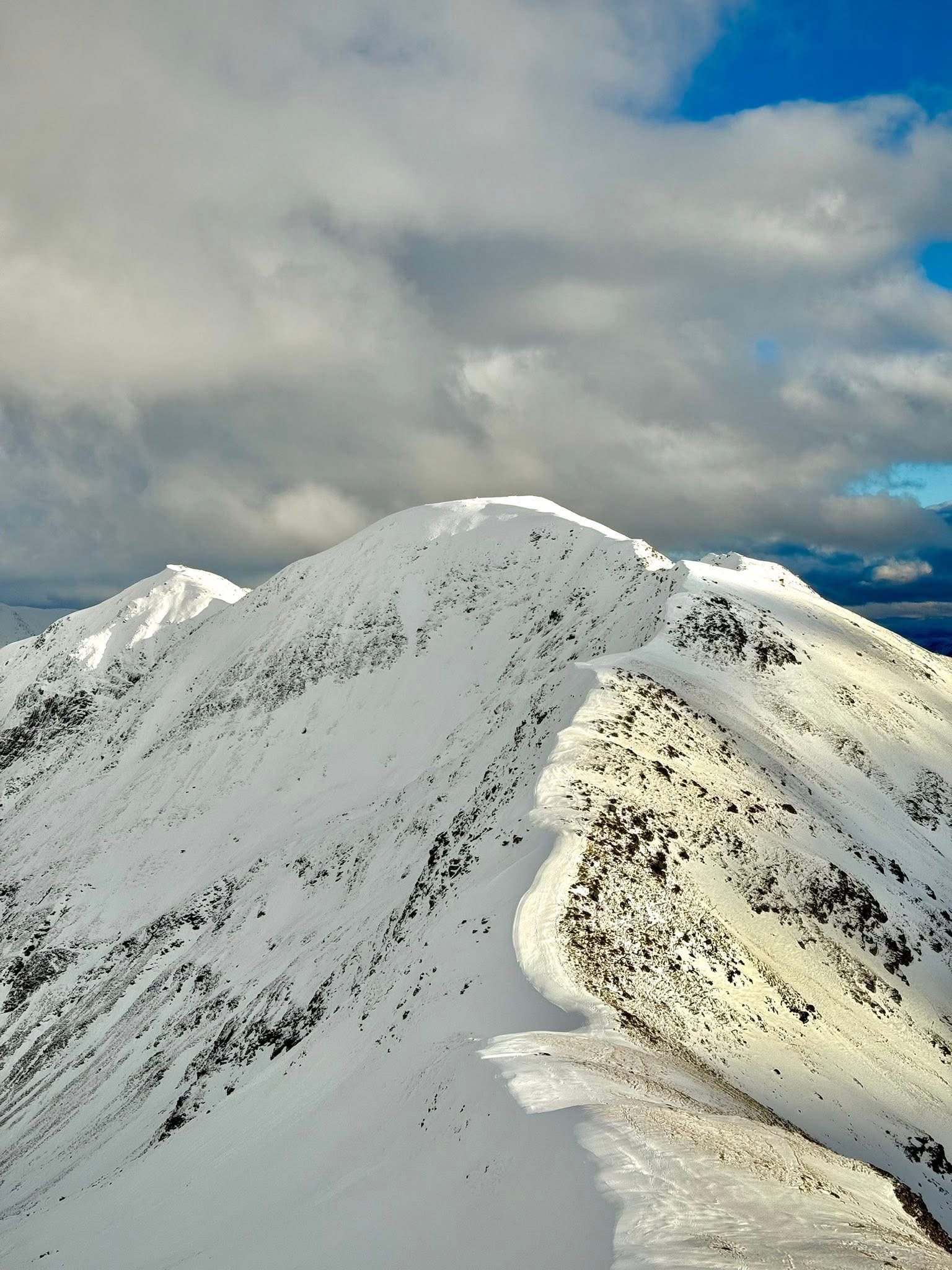
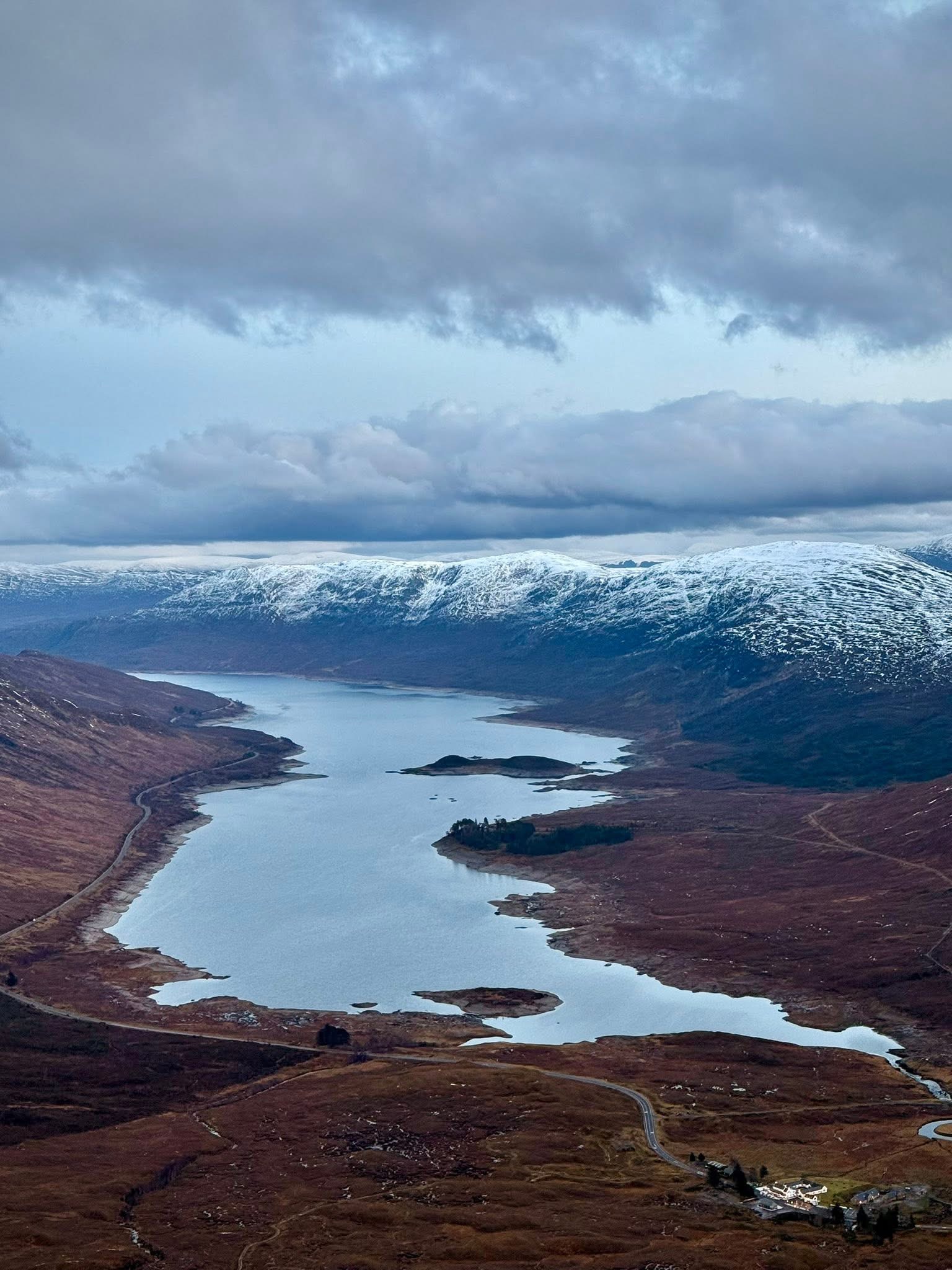
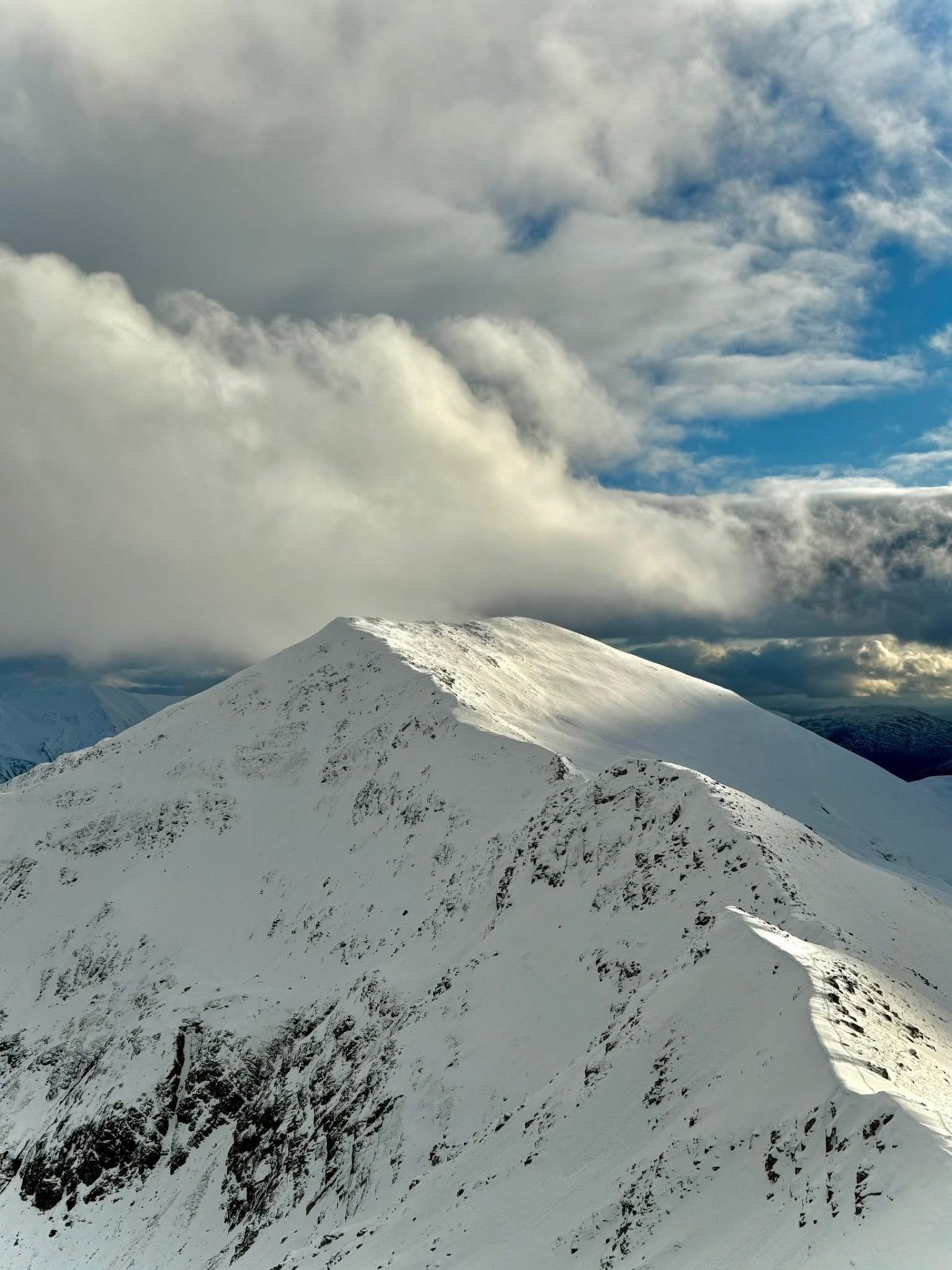
We turned west at the cairns and left the Way for the small shoulder of Stob Mhic Mhartuin. It isn’t far, but the character changes. The ground is rougher, the track faint, the wind more insistent. In this direction you’re on the gentler, grassy end of the Aonach Eagach—nowhere near the famous pinnacles—yet in winter even a friendly hill asks for your full attention. We climbed in the wind’s rhythm, leaning into gusts, listening for the crunch of hard‑frozen turf beneath the powder.
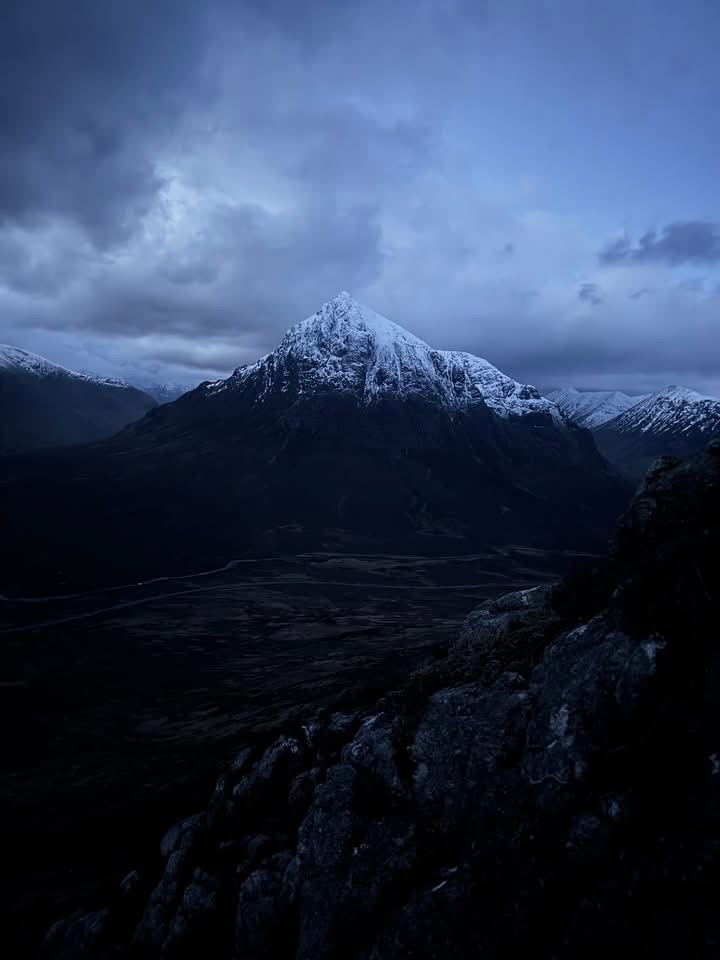
Halfway up, morning arrived in a line—an ember‑thin crack over Rannoch Moor that widened and poured light onto the Buachaille. The glen breathed out. On the little summit we had the balcony view we came for: the big, folded architecture of Glen Coe to the south; to the north the length of the Mamores, a sawtooth skyline running toward Kinlochleven; to the east the open sweep of the moor. We tucked into the lee for a few minutes of heat and photographs, long enough to feel fingers again, not so long that the cold took its chance.
Descent toward the Three Sisters
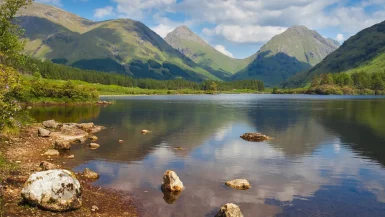
Instead of returning to the cairns and continuing the Way, we turned our faces toward the Three Sisters and began our descent. The massif of Bidean nam Bian pulled the eye forward—three buttressed ridges standing like a procession across the glen—and the zig‑zags dropped us neatly back toward Altnafeadh. In winter light the line down feels both intimate and grand: the track beneath your feet, the road a faint ribbon far below, and those vast south‑side cliffs holding court across the valley.
We kept the pace unhurried on the iced corners, stepped carefully across the burn where the stones wore a thin glaze, and let height run off our legs a switchback at a time. As the last gradient eased, traffic noise rose to meet us and the warmth of the glen returned. A final glance back—Buachaille Etive Mòr in its winter coat, the pass now a small notch on the skyline—and we walked the last metres out to the lay‑by, content with a morning that fit in the palm of a day yet held the whole of Glen Coe.
What made the difference for us
- Starting before dawn with a firm turn‑back time and headtorches we trusted.
- Treating the pass and spur as winter hill terrain: axe and crampons ready, layers dialled, goggles in reserve for spindrift.
- Checking both the mountain weather and the avalanche picture before leaving—and letting those set the tone for pace, pauses, and whether the detour was on.
- Keeping snacks, hot drinks, and dry gloves easy to reach so breaks stayed short and we stayed warm.
- Safety note: in poor conditions it’s best to stick to the built path system for the descent—direct, ad‑hoc drops from the ridge into the glen are hazardous and not advised.*