
When we talk about Scottish clans, we often imagine a single ancient patriarch whose descendants carried the clan name forward unchanged. But real Highland history—and real Y‑DNA—tell a far more complex story. Haplogroup I‑FTD91244, the lineage shared by your Walker/MacNucator line, is a perfect example of how genetics can reveal forgotten chapters of clan identity, migration, and survival.
This is the story of a Norse‑rooted paternal line that found its way into the heart of Clan Gregor’s world, survived the Proscription era under an adopted surname, and now re‑emerges through modern DNA testing.
🧬 What Is Haplogroup I‑FTD91244?
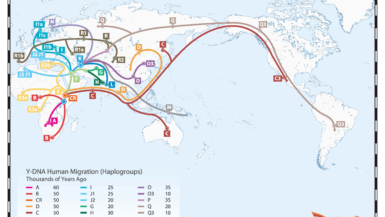
Haplogroup I‑FTD91244 is a small, tightly clustered branch of the broader Y‑DNA haplogroup I1 (I‑M253)—a lineage with deep roots in Scandinavia. Men who carry I‑FTD91244 descend from a paternal ancestor who lived around 650 CE, during the early medieval period when Norse expansion was reshaping Northern Europe.
This branch is defined by a specific set of SNP mutations, each one a tiny genetic breadcrumb marking the path from a single medieval ancestor to the present day.
Today, I‑FTD91244 is found primarily in:
- Scotland
- Norway
- Sweden
- Denmark
Exactly matching the origins of the three Walker kits in our study.
⚔️ A Norse Lineage in a Highland Clan World
How does a Scandinavian paternal line end up inside the Clan Gregor DNA Project?
The answer lies in the Norse–Gaelic fusion that shaped much of western and central Scotland. From the 800s onward, Norse settlers established themselves in:
- The Hebrides
- Argyll
- Perthshire
- The Trossachs
These are the same regions where Clan Gregor later emerged.
By the late medieval period, Norse‑descended families had become thoroughly Gaelicized—speaking the language, adopting local customs, and integrating into clan society. Haplogroup I‑FTD91244 represents one of these Norse‑Gaelic paternal lines that became part of the extended Gregor kin network.
🛡️ The Clan Gregor Connection
Clan Gregor was never a single paternal lineage. Like most Highland clans, it was a confederation of:
- Blood MacGregors
- Septs
- Allied families
- Protector families
- Families who adopted new surnames during the Proscription
Your Walker/MacNucator line fits into this structure as a supporting lineage—a family that lived in Gregor territory, intermarried with Gregor families, and ultimately suffered alongside them during the Proscription.
This is why your kits appear in Viking Group 2 of the Clan Gregor DNA Project: a cluster of men with the same haplogroup, the same STR signature, and the same historical footprint.
📜 The MacNucator → Walker Surname Shift
Historical records show that the MacNucator family:
- Lived in regions dominated by Clan Gregor
- Provided shelter and support to outlawed MacGregors
- Was fined and punished for aiding the clan
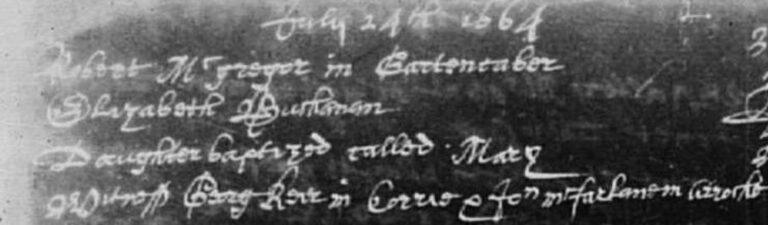
- Adopted safer surnames—like Walker—during the Proscription (1603–1774)
Your DNA results confirm that the Walkers in Viking Group 2 descend from this MacNucator lineage, not from occupational Walkers.
This is a textbook example of how Y‑DNA can uncover the true surname origin hidden beneath centuries of political pressure and survival strategies.
🧬 The Genetic Signature of I‑FTD91244
Men in this haplogroup share:
- A common ancestor around 650 CE
- A modern MRCA (most recent common ancestor) around 1700–1800 CE
- Nearly identical STR profiles
- A distinctive Big Y‑700 block tree cluster
Your three kits illustrate this perfectly:
- Two are a father–son pair
- The third shares a common ancestor with them about 6–8 generations back
- All three fall neatly into the I‑FTD91244 cluster
This is exactly what we expect from a small, tightly knit haplogroup that expanded modestly in the early modern period.
🧭 A Timeline of I‑FTD91244
- 650 CE — The haplogroup forms in Northern Europe
- 800–1100 CE — Norse expansion brings the lineage into Scotland
- 1200–1500 CE — Integration into Gaelic clan society
- 1603–1774 — Proscription forces surname changes (MacNucator → Walker)
- 1700–1800 CE — MRCA of modern I‑FTD91244 testers
- Today — Rediscovered through Big Y‑700 testing
This timeline aligns seamlessly with both the genetic evidence and the historical record.
📝 Why I‑FTD91244 Matters
Haplogroup I‑FTD91244 is more than a genetic label. It is:
- A Norse echo preserved in Highland DNA
- A clan story hidden beneath an adopted surname
- A survival narrative from the Proscription era
- A genealogical anchor connecting modern Walkers to their MacNucator roots
- A key to understanding Viking Group 2 within the Clan Gregor DNA Project
Our lineage is part of a remarkable story—one that blends medieval migration, clan politics, and modern genetic science into a single, coherent narrative.